Boyne Valley Camino: A 25km Celtic Camino Loop from Drogheda

The Boyne Valley Camino is a 25km looped walk starting and finishing in Drogheda, County Louth. It is part of the Celtic Camino, which allows walkers to complete 25km in Ireland before continuing from A Coruña to Santiago de Compostela in Spain. The A Coruña route is around 75km, so combining it with a 25km Irish Camino route brings the total distance to the 100km required for the Compostela.
I walked the Boyne Valley Camino with a friend as part of our preparation for the Celtic Camino from A Coruña to Santiago, which we are planning to do in September. It was a beautiful sunny day, and although 25km is still a long walk, it turned out to be a really enjoyable route with plenty of variety.
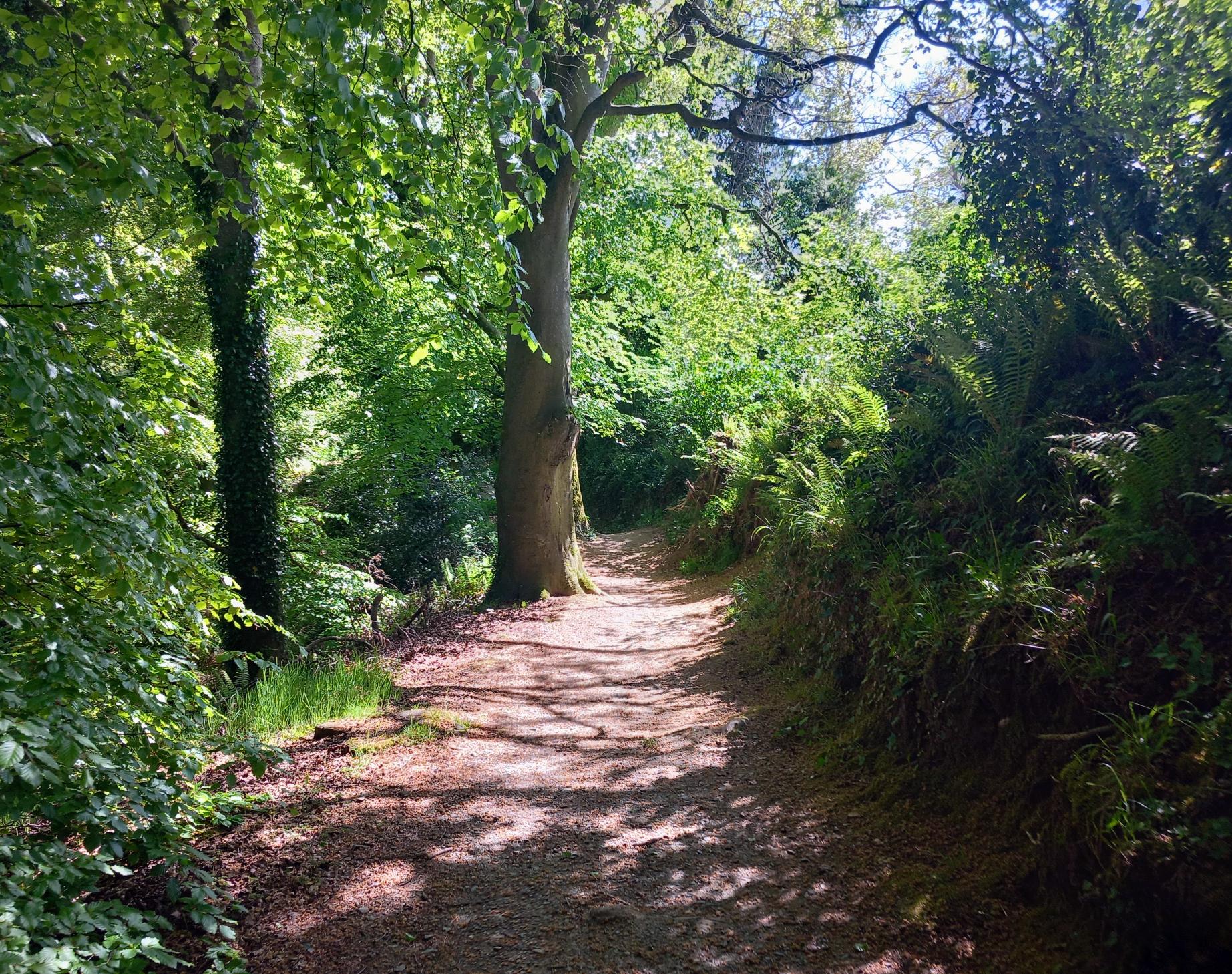
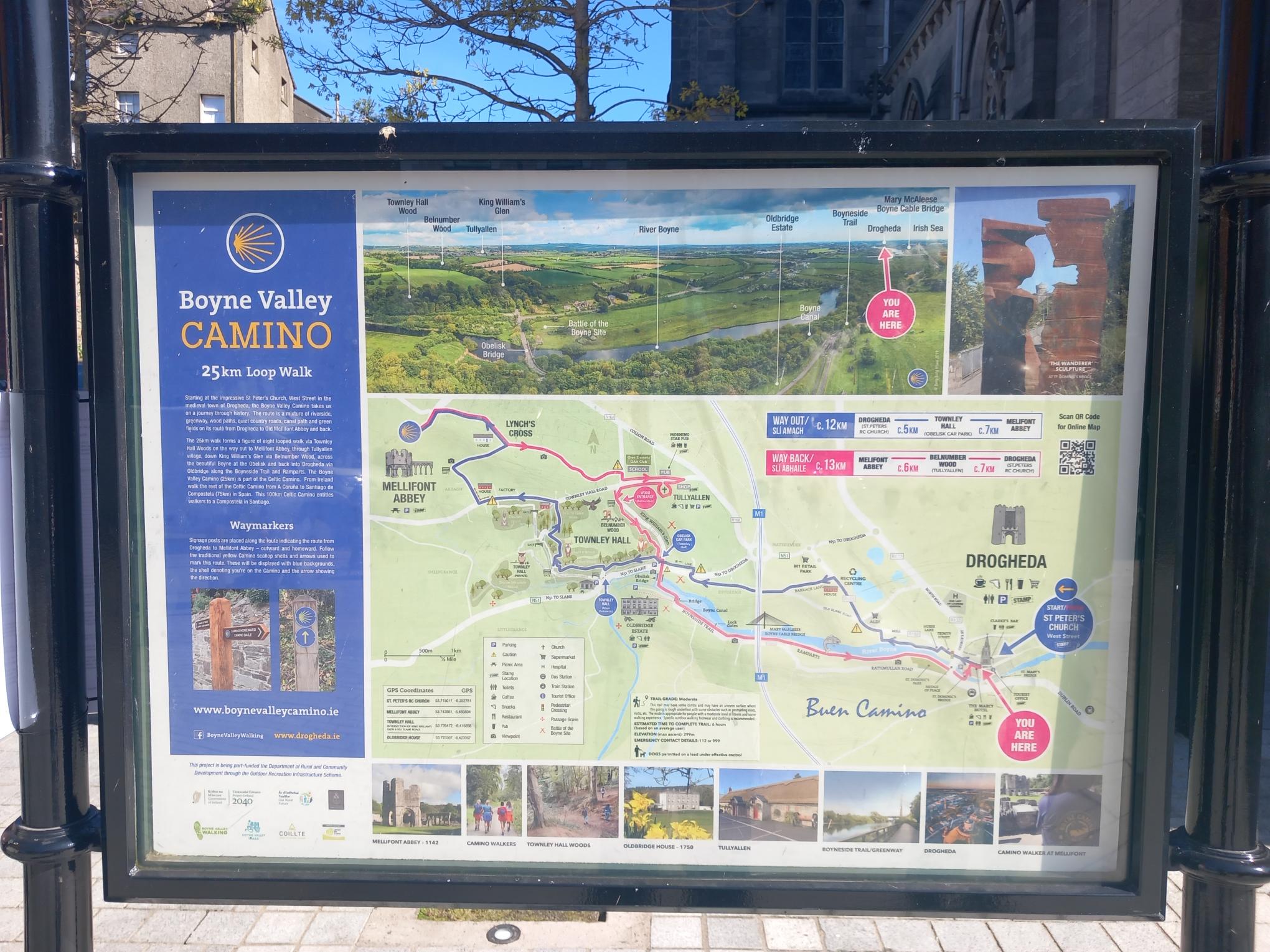
The route is shaped like a figure of eight, starting and finishing in Drogheda. Along the way, it links together riverside paths, woodland trails, quiet country roads, historic sites and small villages, with highlights including Mellifont Abbey, Tullyallen, King William’s Glen, Belnumber Wood, Oldbridge and the Boyne Greenway.
What I liked most about the walk was the variety. There are town streets, riverside paths, woodland trails, quiet roads, canal sections, greenway, historic buildings, churches, abbey ruins and lots of Camino waymarkers along the way.
Bellow see the Hike Map I have done using Hiiker App.
Boyne Valley Camino Walk: Quick Facts
| Hike Distance: | 25 km |
| Difficulty | Moderate because of the distance |
| Duration | 5 h |
| Total Ascent | 423 m |
| Trail Type | Loop |
| Start and finish | St Peter’s Church, West Street, Drogheda |
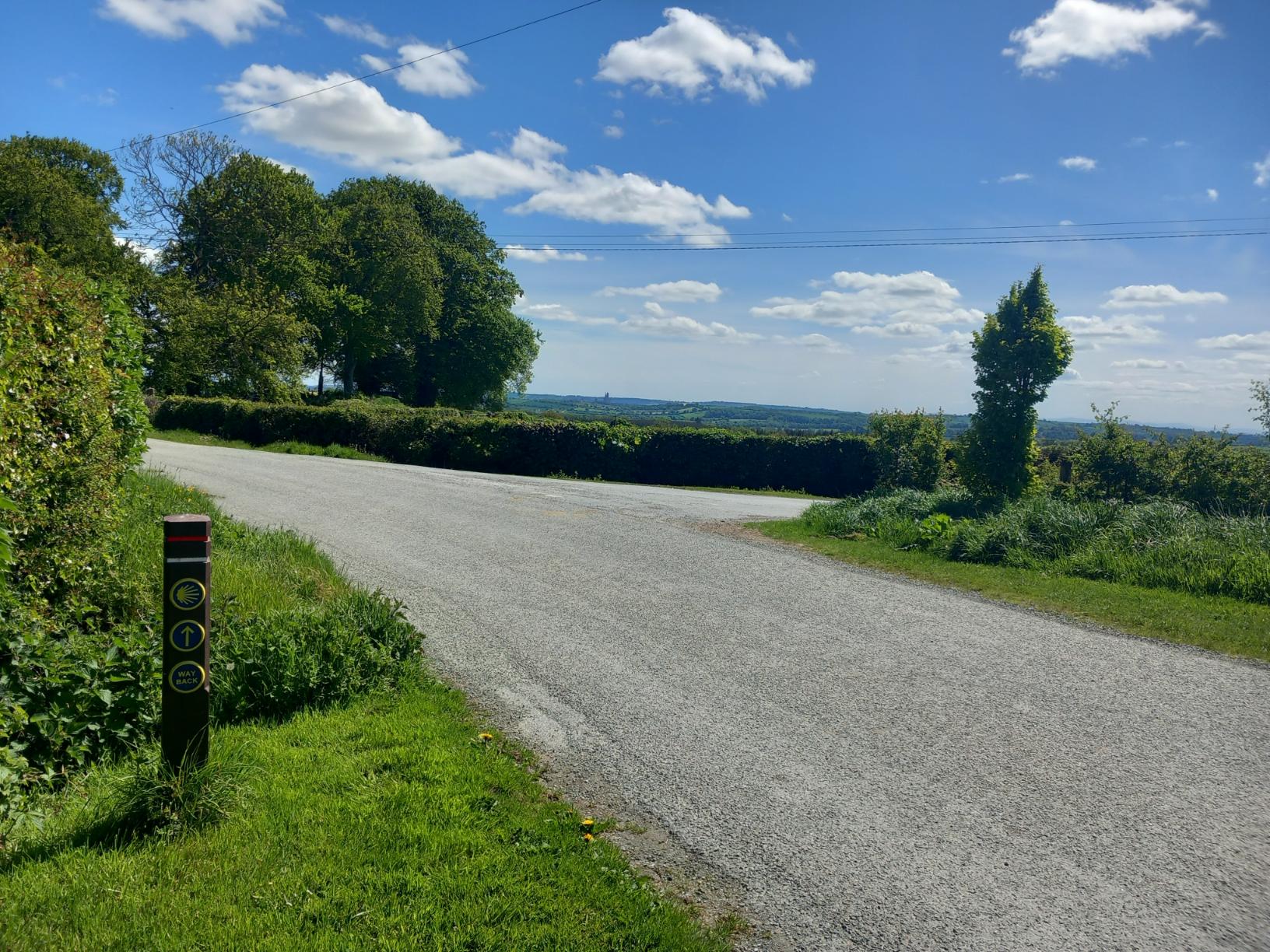
| Waymarking | Very good, with Camino shells, yellow arrows and route signs |
| Parking used | Haymarket Car Park, Drogheda |
| Parking cost | €1.50 per hour when I visited |
| Dublin Drive | 45 minutes from Dublin |
| Main places on route | Drogheda, Townley Hall Woods, Mellifont Abbey, Tullyallen, King William’s Glen, Belnumber Wood, Oldbridge, River Boyne |
| Good for | Camino training, Celtic Camino preparation, long-distance walking and history lovers |
Although the route is not technically difficult, I would still describe it as moderate because of the distance. Walking 25km takes time, and your legs will know about it by the end.
Why We Walked the Boyne Valley Camino
My friend and I are planning to walk the Celtic Camino from A Coruña to Santiago de Compostela in September.
The route from A Coruña to Santiago is about 75km, which is shorter than the usual 100km walking distance required for the Compostela. The Celtic Camino allows pilgrims to walk 25km in Ireland first, collect stamps in a Camino passport, receive a Celtic Camino Compostela from Camino Society Ireland, and then continue from A Coruña to Santiago. Camino Society Ireland also explains that once you recommence in A Coruña, the normal rules apply, including collecting two stamps per day in Spain.
So for us, the Boyne Valley Camino was not just a day walk. It was the first part of our Camino journey.
Parking in Drogheda
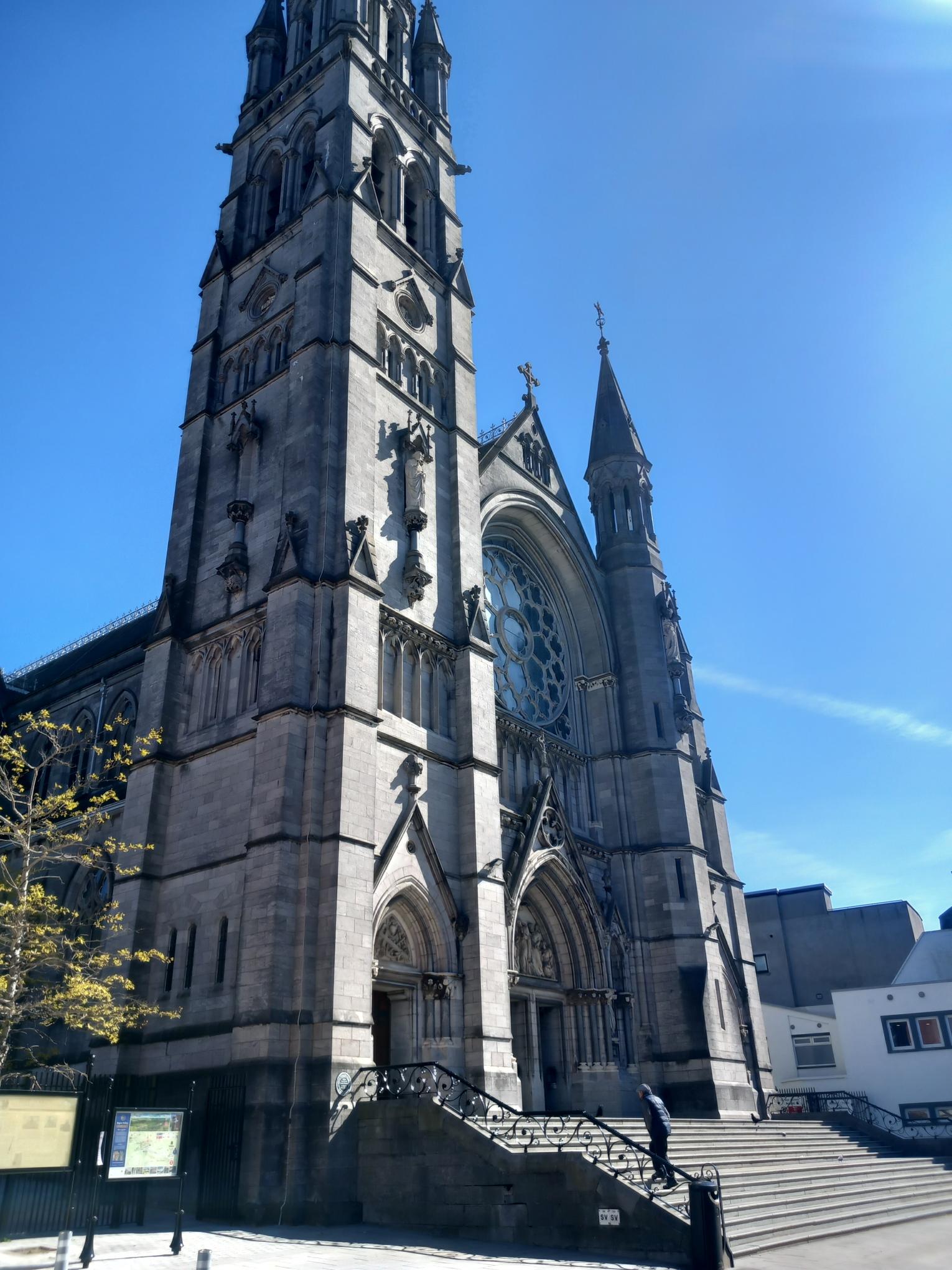
I parked in Haymarket Car Park in Drogheda. It was very handy for the start of the walk, as it is close to St Peter’s Church on West Street, where the Boyne Valley Camino begins.
When I visited, parking cost €1.50 per hour.Paid €8.50 in total that day.
From the car park, it was only a short walk to the church and the start of the Camino.
Starting at St Peter’s Church
We started the walk at around 10:10am on a beautiful sunny morning.
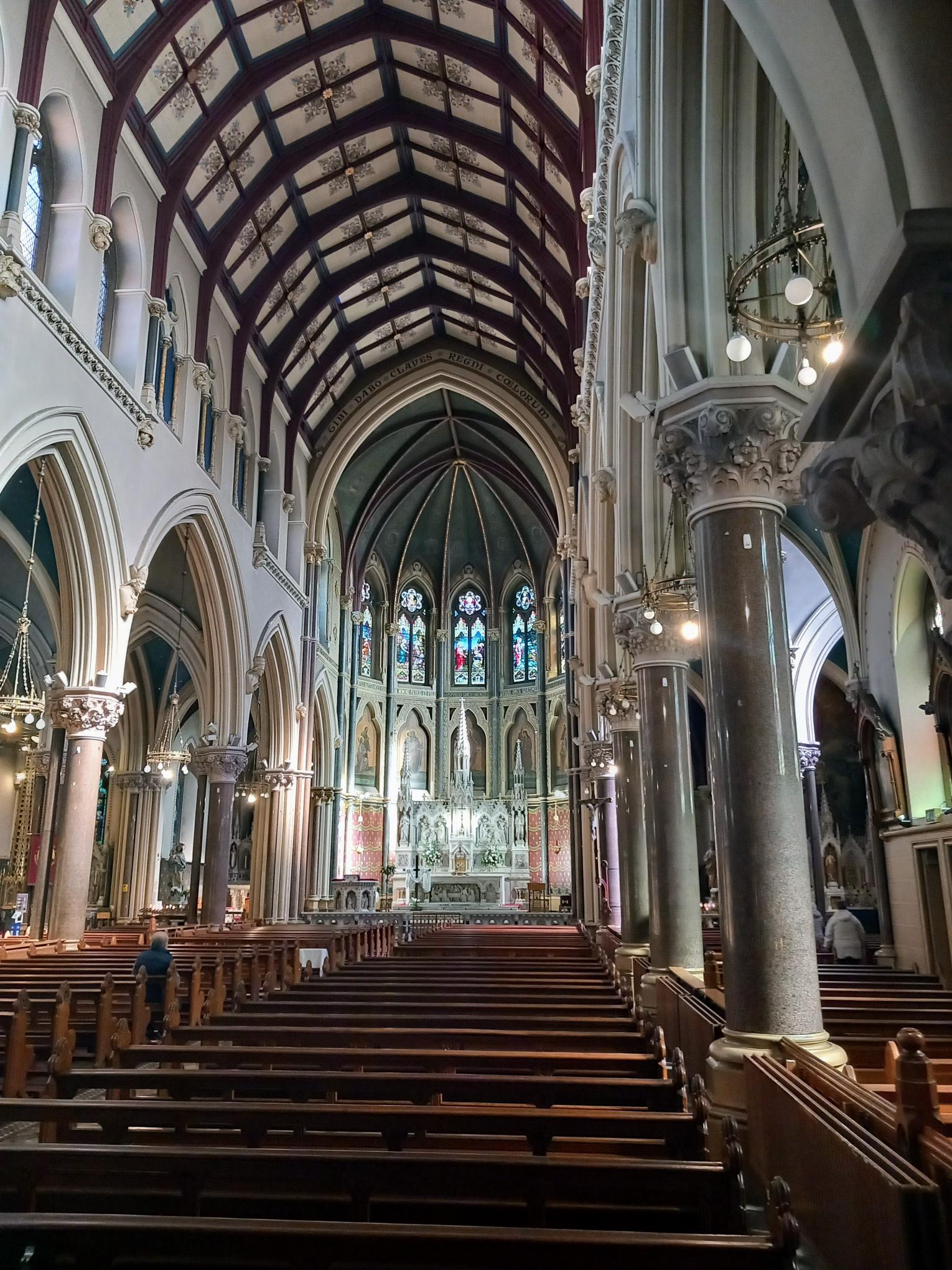
Before setting off properly, we wanted to get our Camino passport stamped. We first went into St Peter’s Church, but we could not find anyone there who could stamp the passport. There was a notice saying the office was open during office hours during the week.
We then went to the tourist office, but that was closed too.
In the end, we went to The Marcy Hotel, just across the road from St Peter’s Church. It was only about a minute away, and we were able to get our first stamp there.
This is worth keeping in mind if you are starting the Boyne Valley Camino at the weekend or outside normal office hours. It is a good idea to have a few possible stamp locations in mind before you go.
Drogheda to Mellifont Abbey
From Drogheda, we followed the official Camino waymarkers out towards Mellifont Abbey.
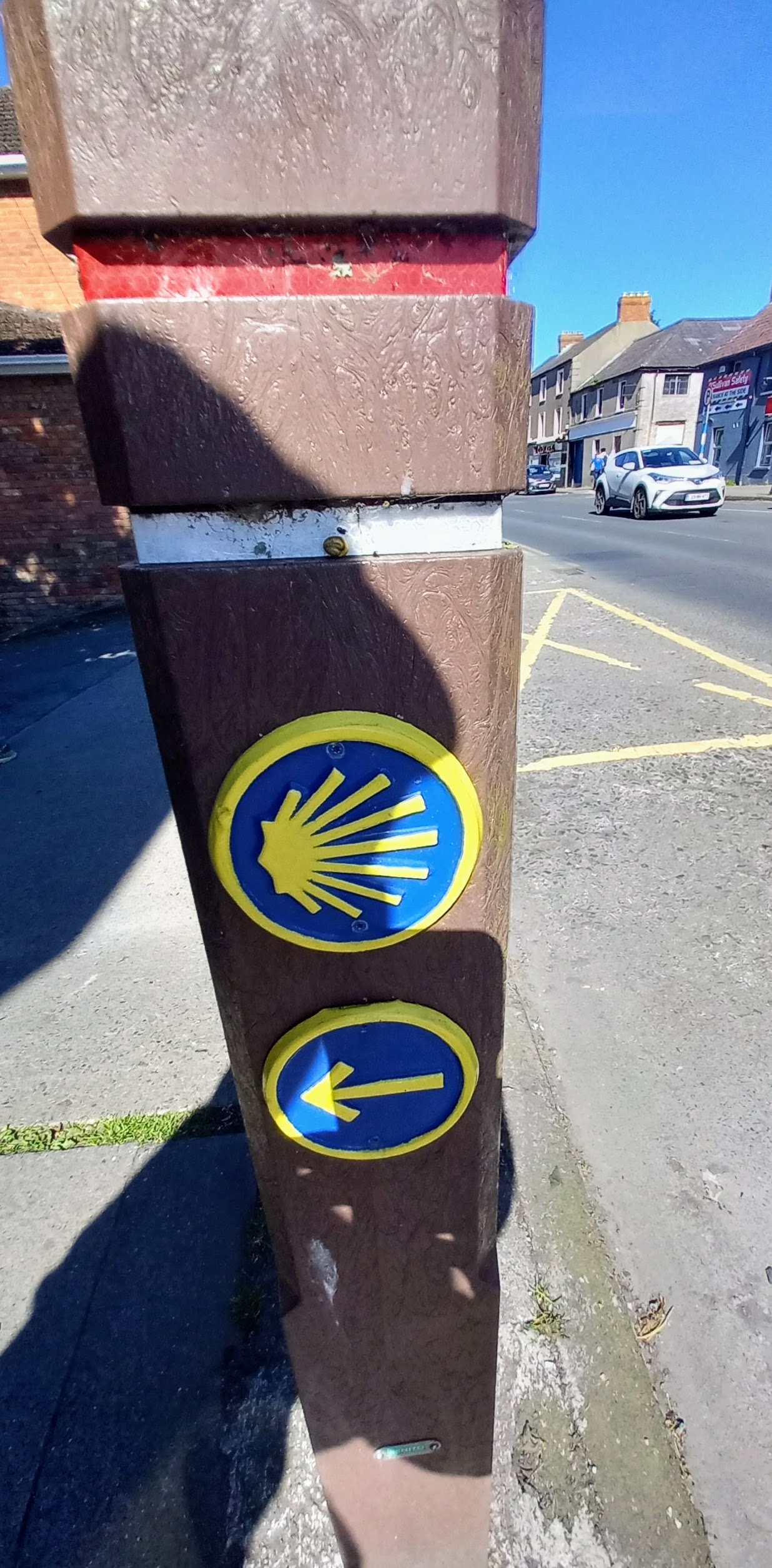
We used the official Boyne Valley Camino map, where the blue route marks the outward journey from Drogheda to Mellifont Abbey, and the pink route shows the return journey back to Drogheda. This made the figure-of-eight layout much easier to follow. The route was also well marked on the ground with Camino shells, yellow arrows and direction posts, so navigation was very straightforward.
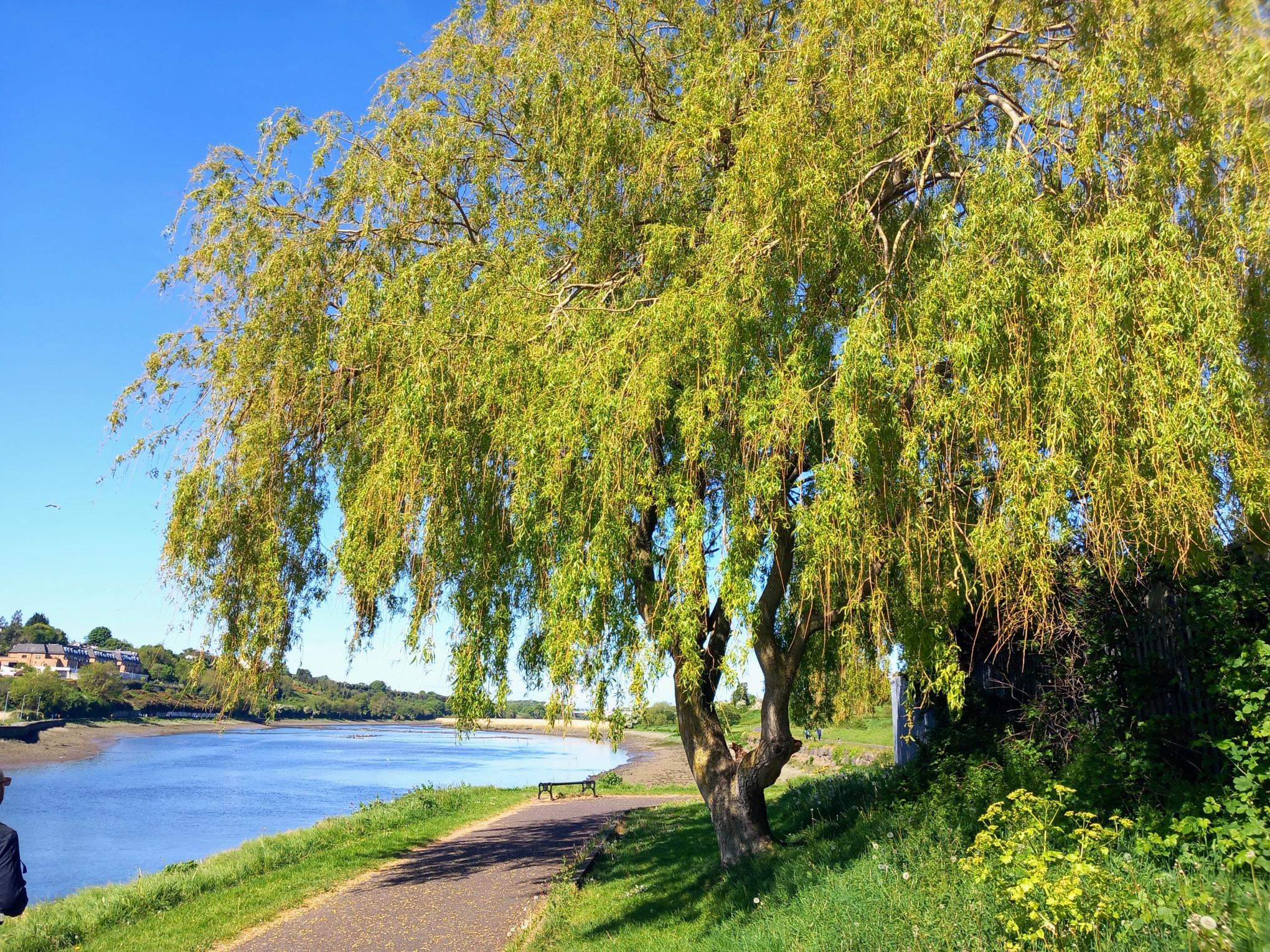
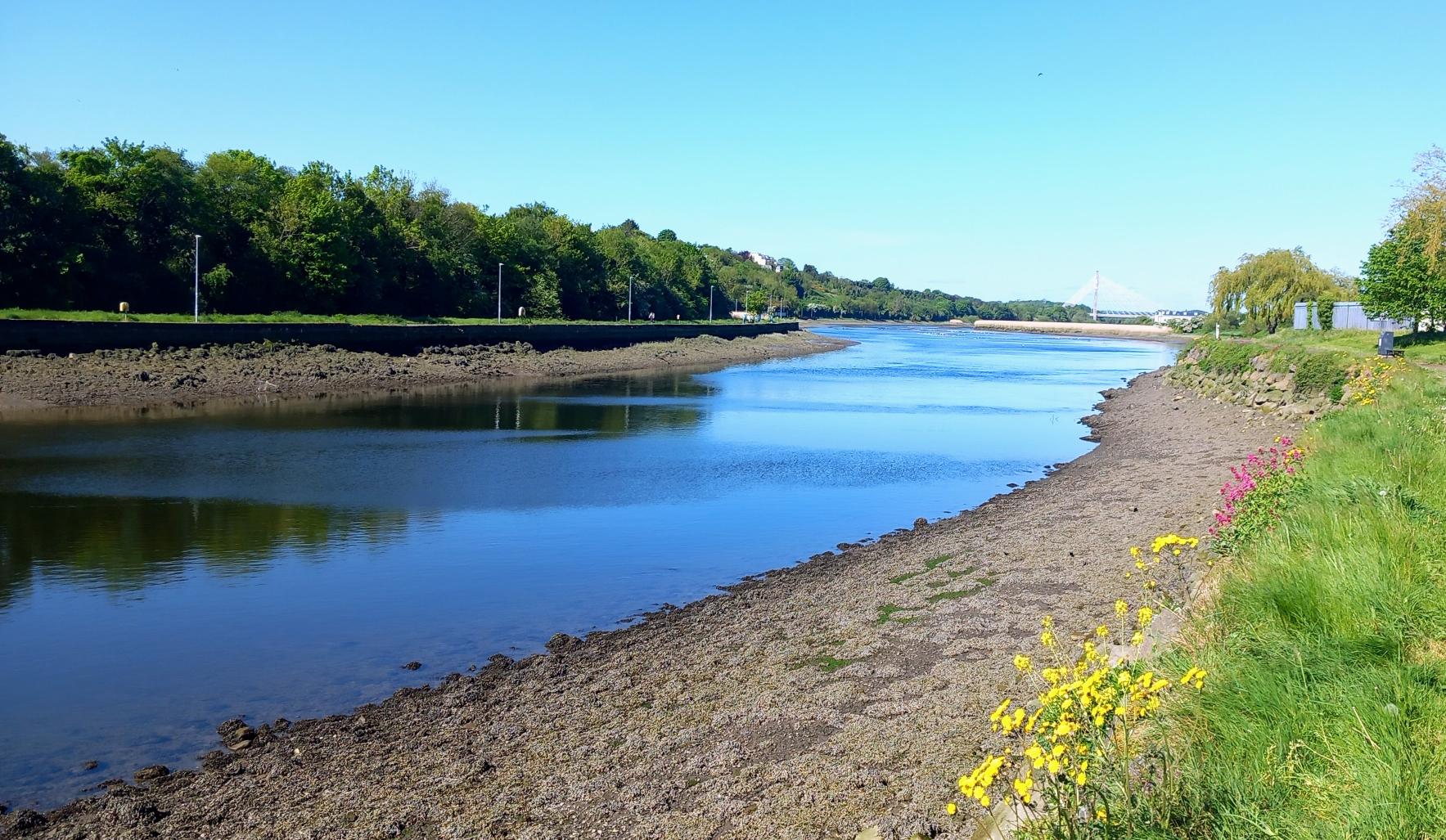
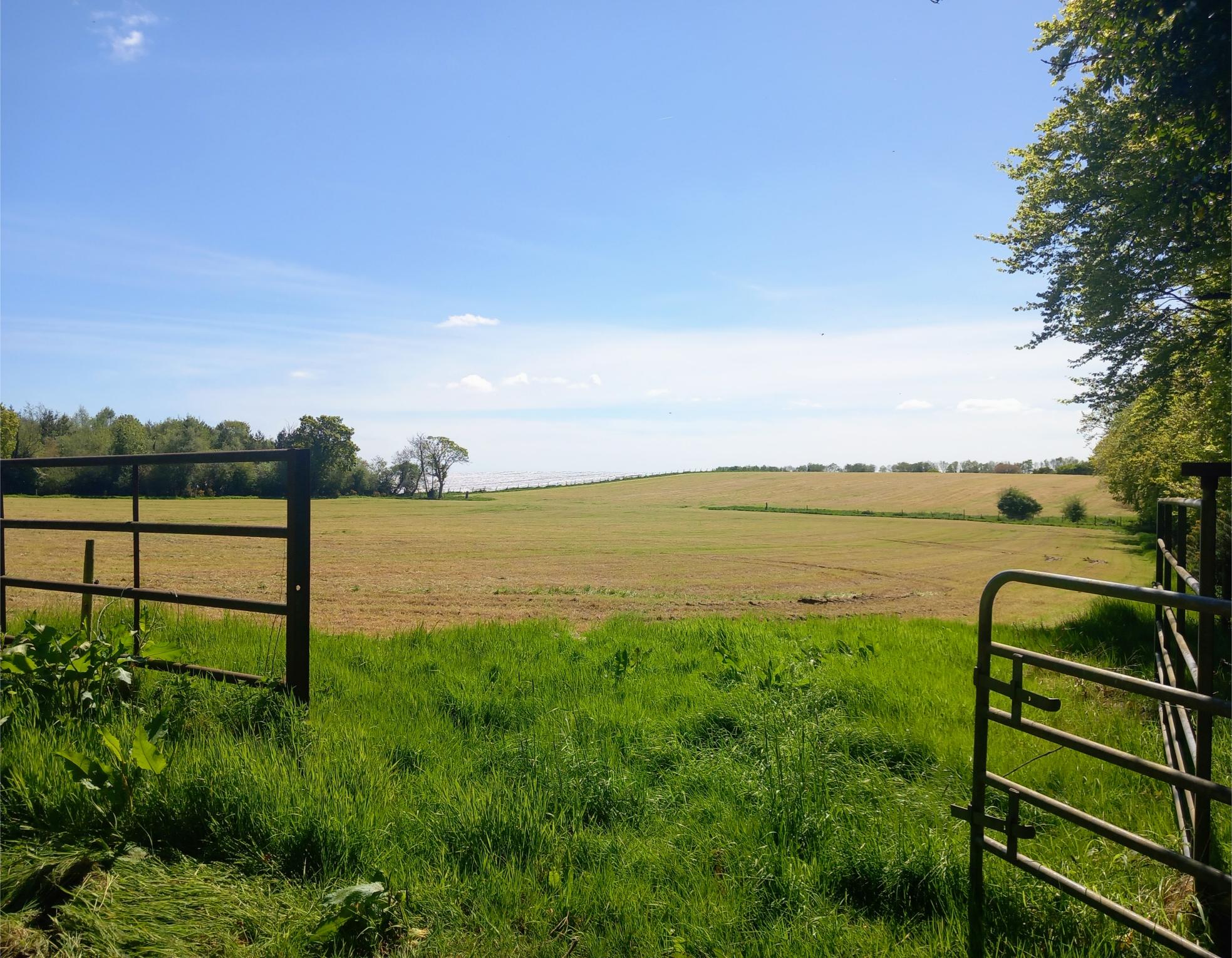
The first part of the walk gives a nice mix of Drogheda streets, riverside sections and quieter paths as you gradually leave the town behind. One of the best things about the Boyne Valley Camino is that the scenery keeps changing. It never feels like the same type of walking for too long.
The route then continues towards Townley Hall Woods, one of the key woodland sections of the walk. This is also where the figure-of-eight shape of the route becomes useful, as the trail crosses through this general area on both the outward and return sections.
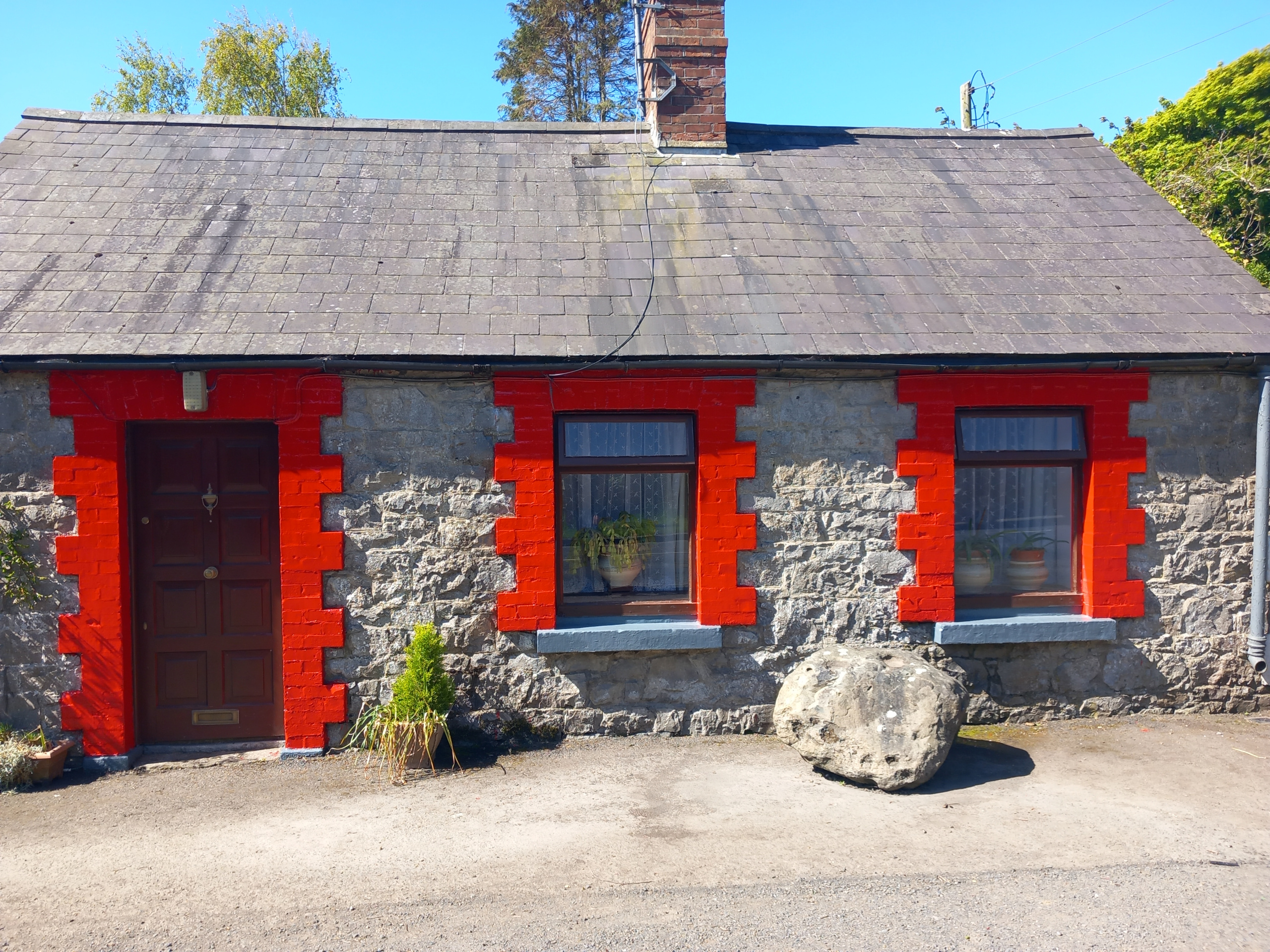
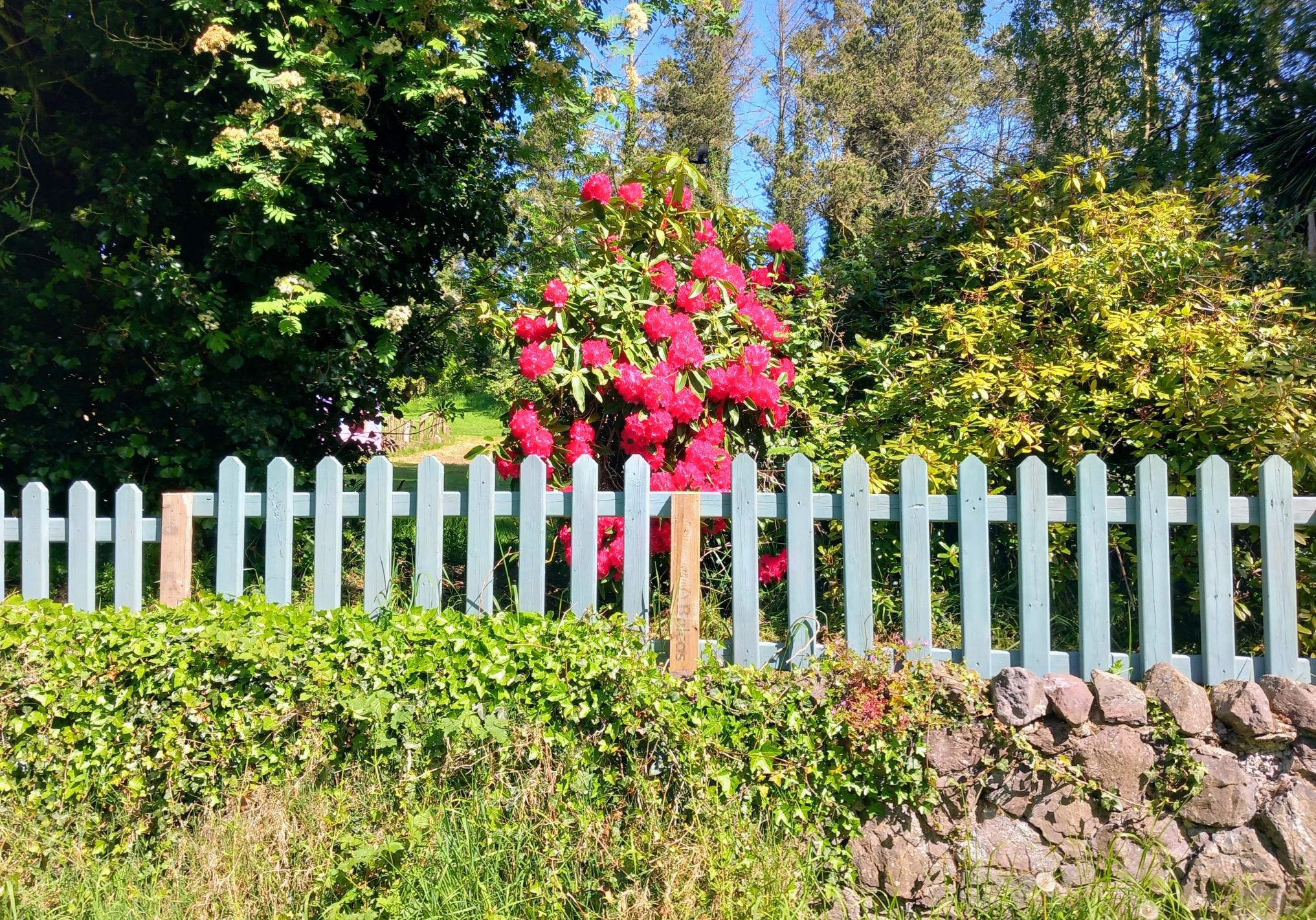
Townley Hall Woods
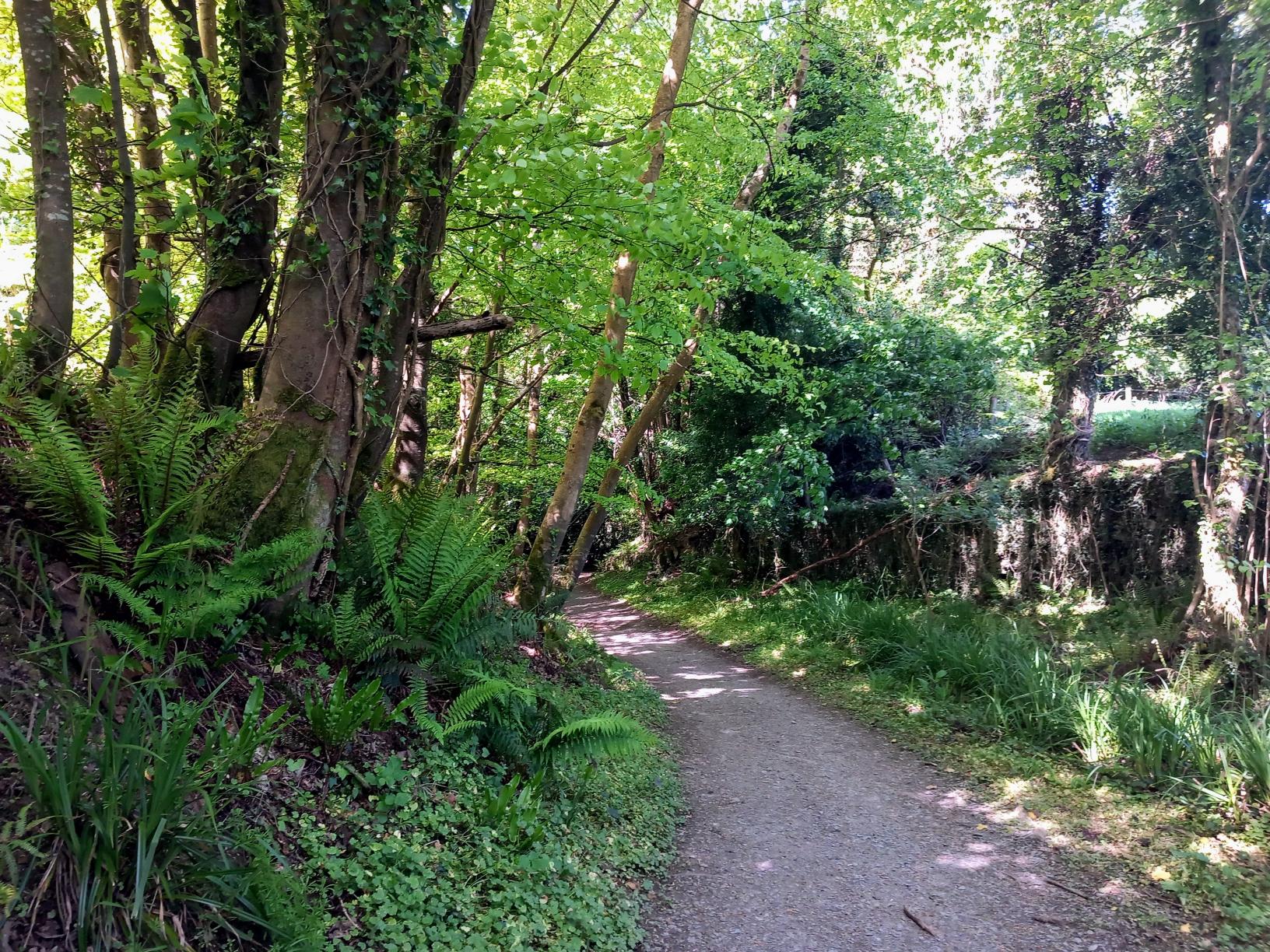
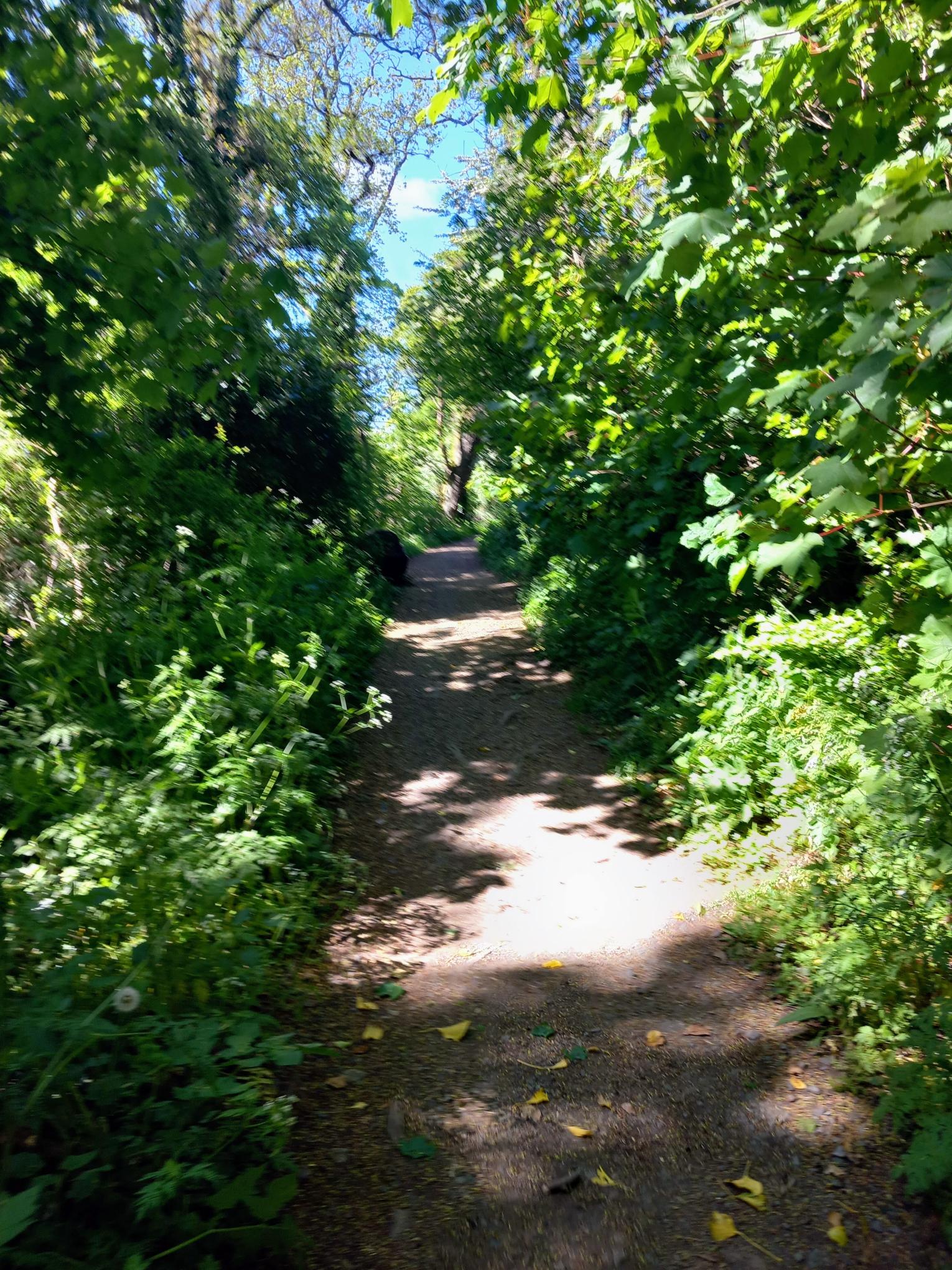
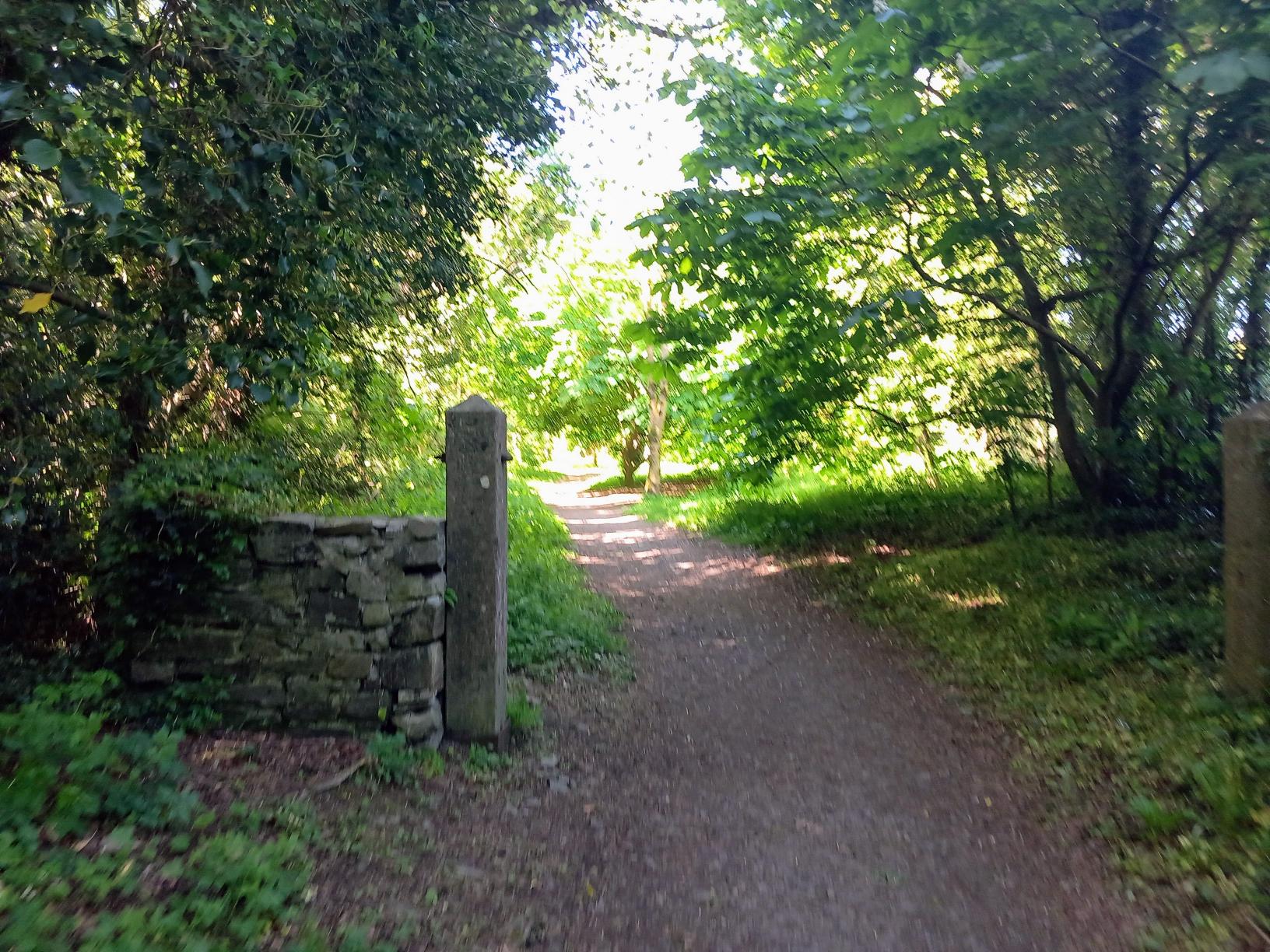
The woodland sections were some of the nicest parts of the walk.
After leaving the town and riverside paths, it was lovely to get into the trees and onto quieter trails. There are some uneven sections and woodland paths, but nothing too difficult if you are used to walking.
The shade was especially welcome on a sunny day. This part of the route gives the Camino a very different feel from the streets of Drogheda and the country roads later on.
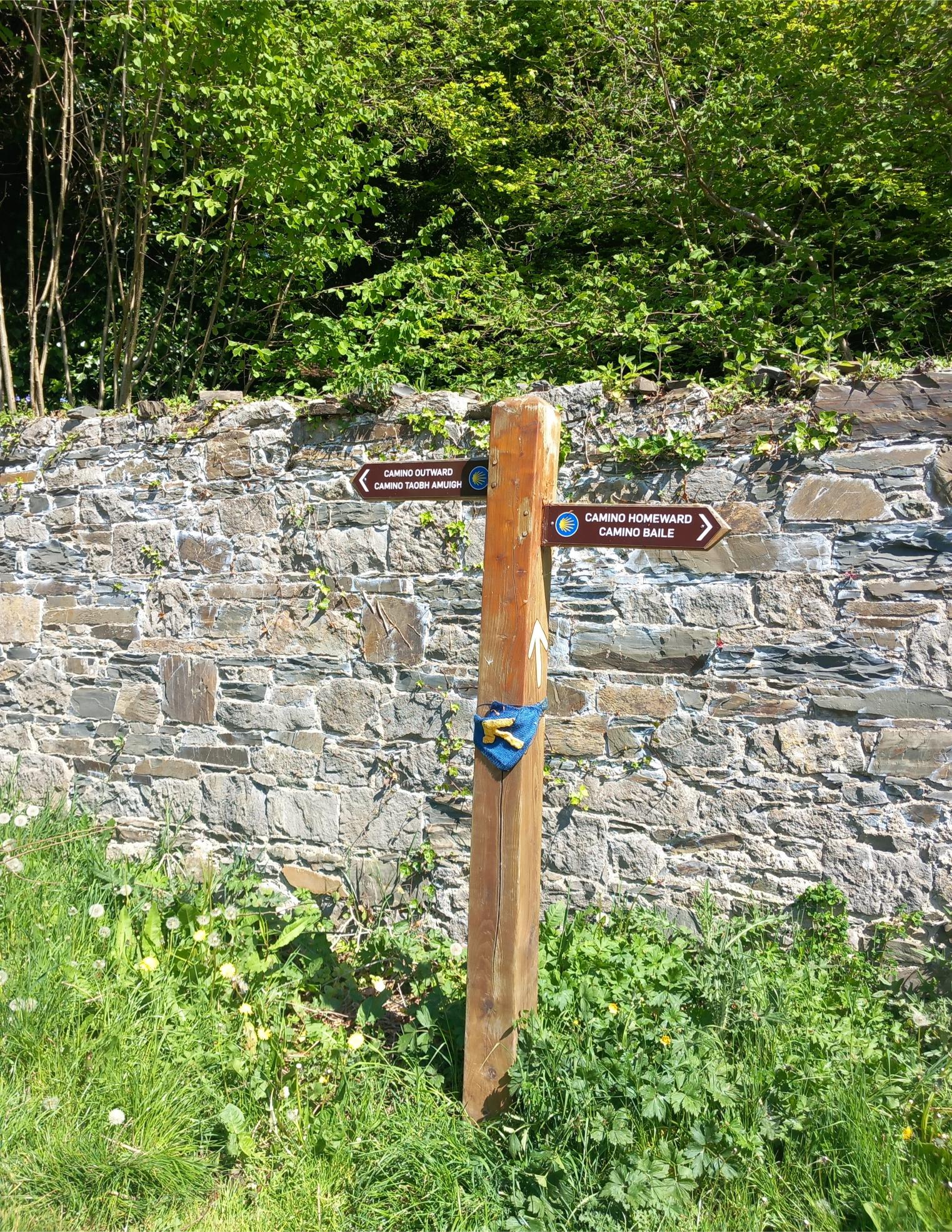
Mellifont Abbey Monastic Site
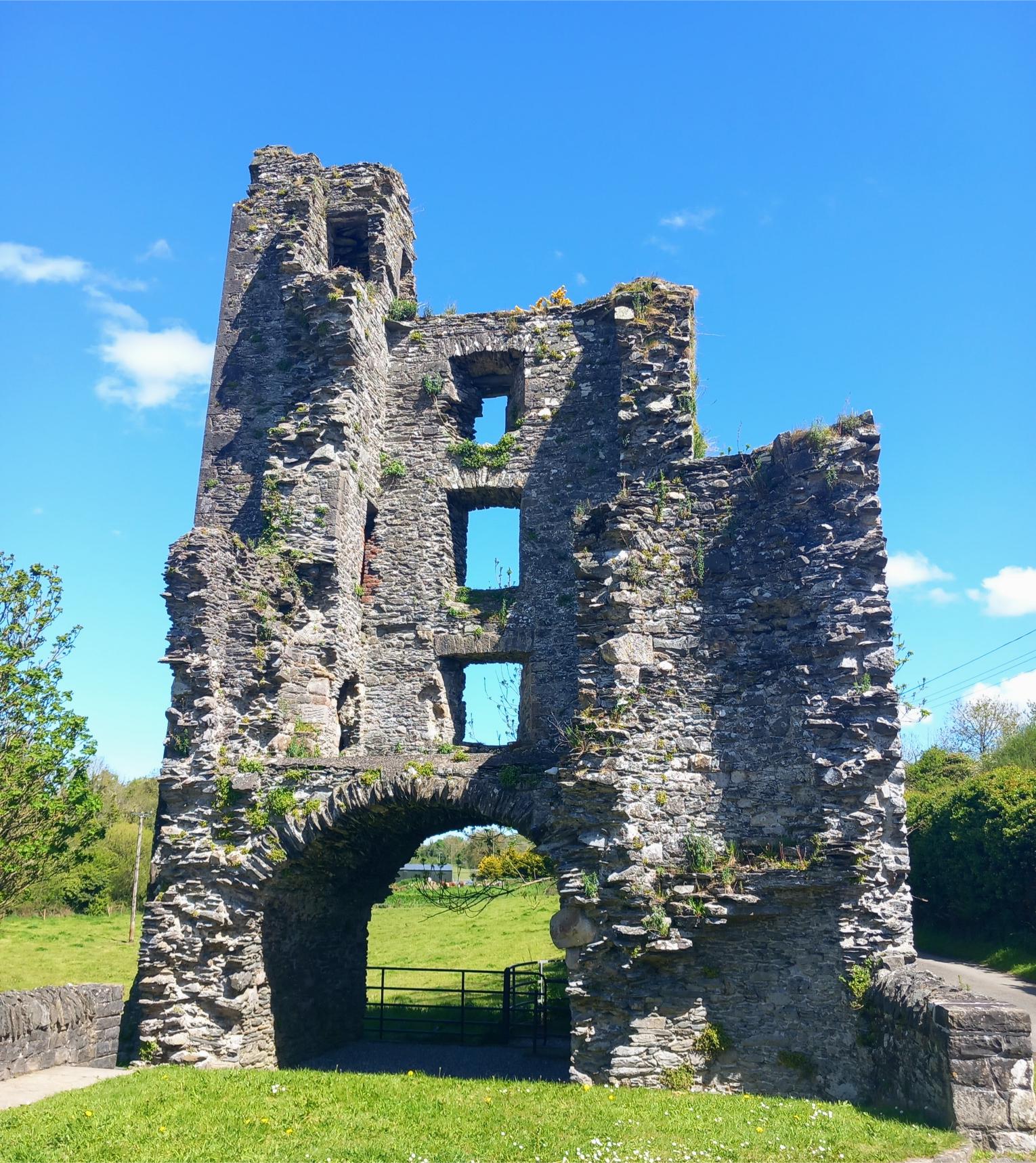
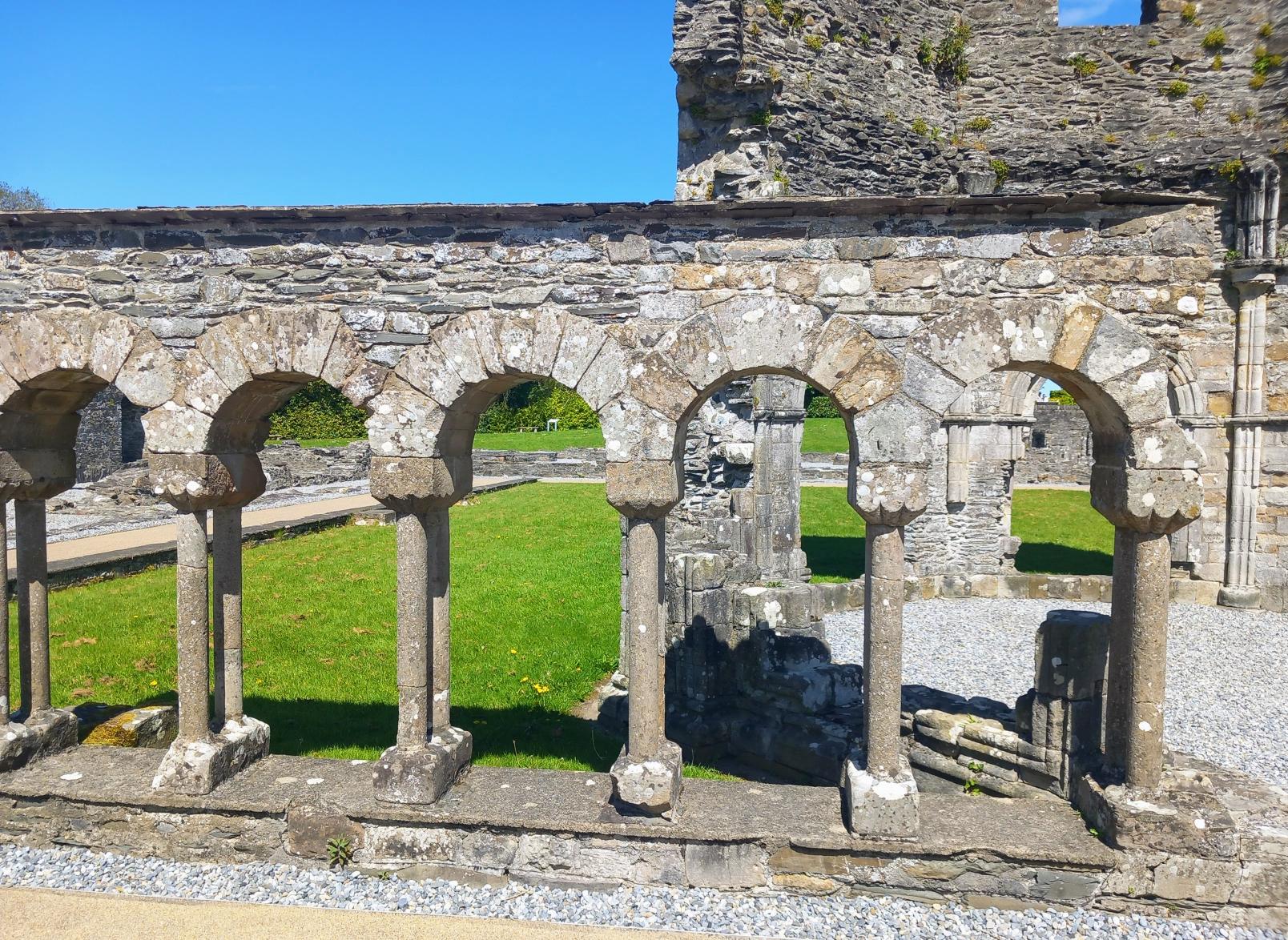
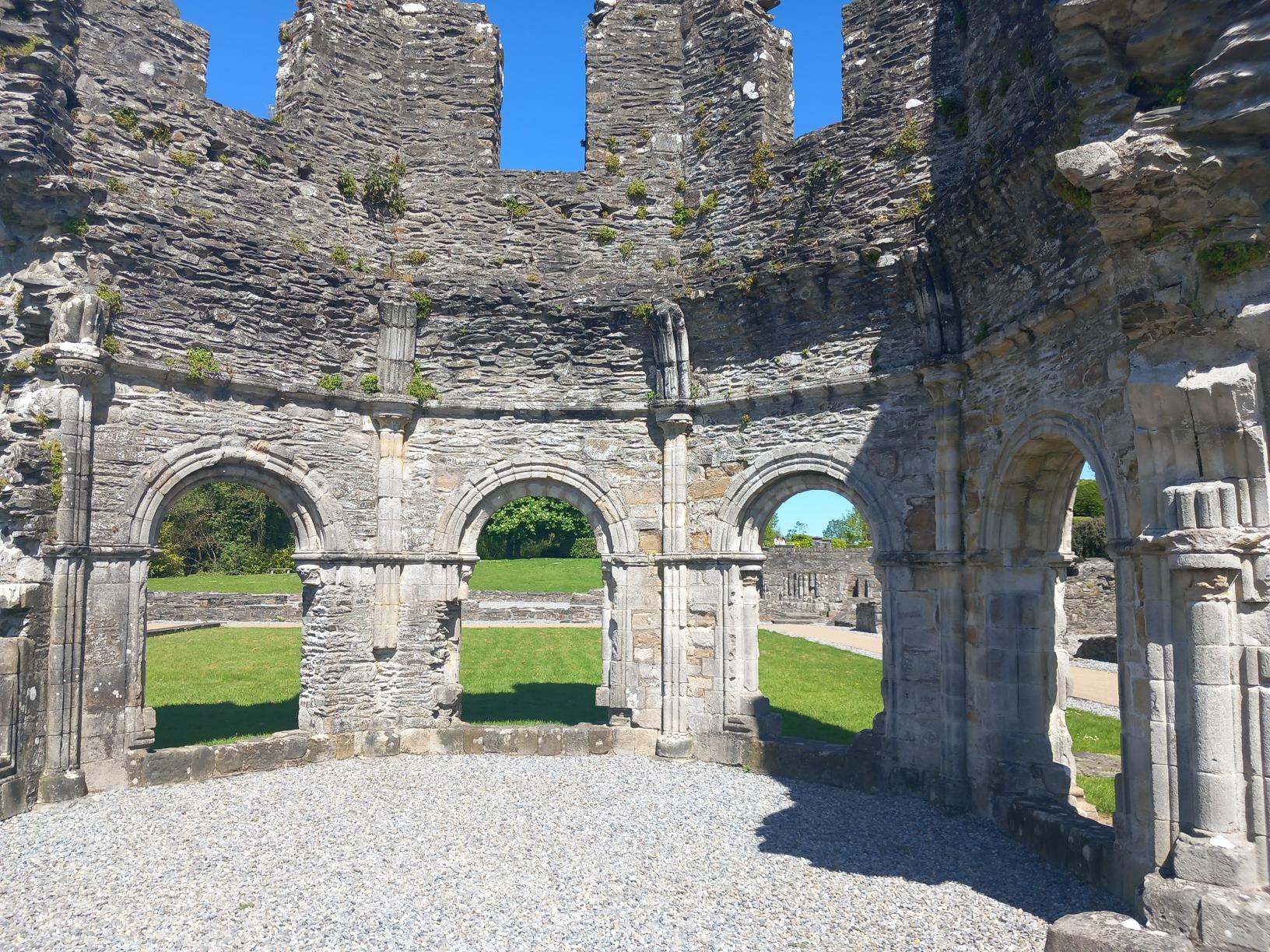
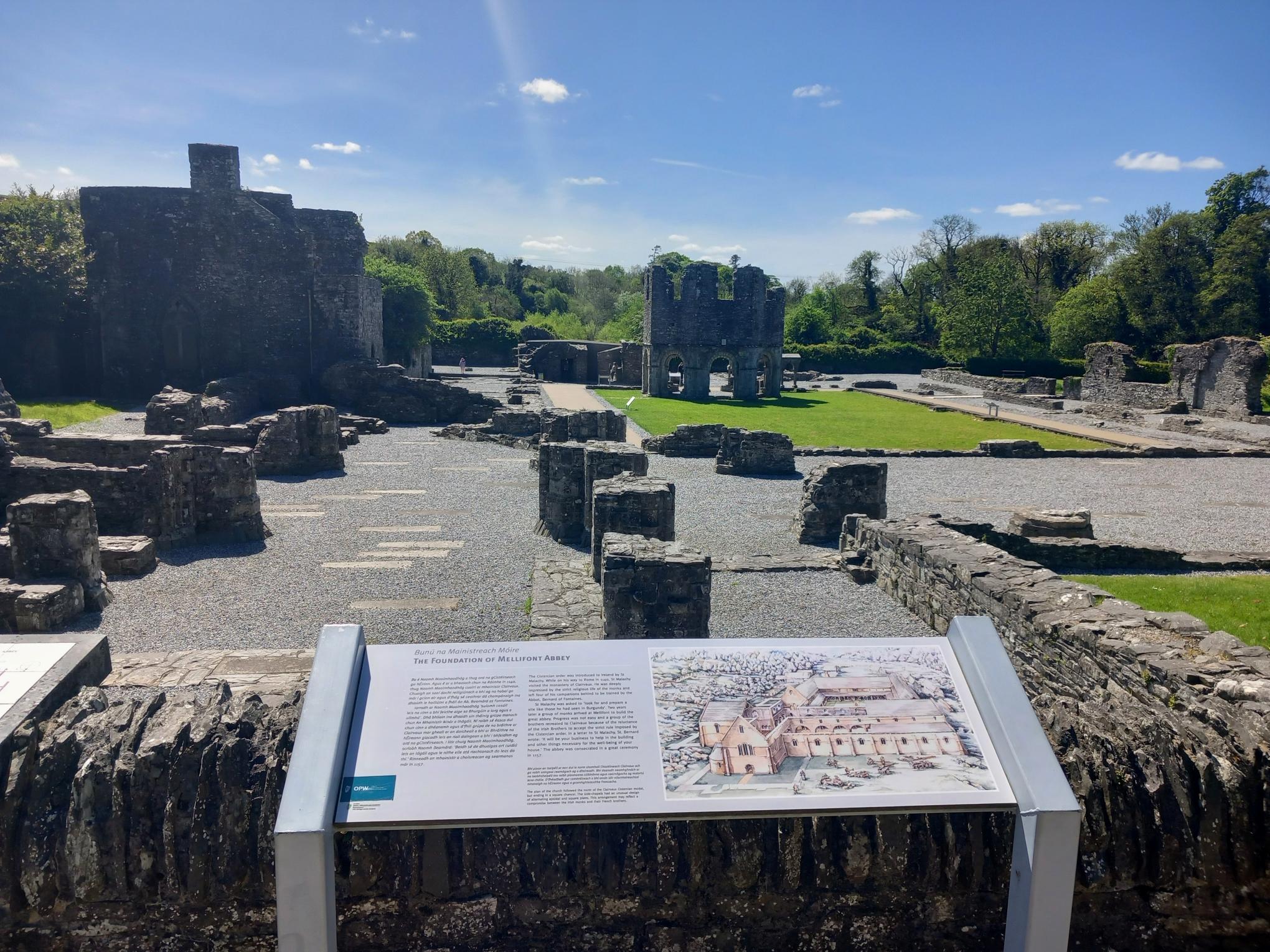
The first major destination on the walk is Mellifont Abbey Monastic Site, and it makes an ideal halfway stop on the Boyne Valley Camino.
We went into the visitor centre to get our next Camino passport stamp, then paid the €3 admission fee to visit the abbey ruins. It is well worth taking the time to explore the site, especially if you enjoy historic places. Mellifont Abbey was Ireland’s first Cistercian monastery, founded in the 12th century, and the ruins are one of the main highlights of the route.
We were hoping to get a cup of coffee here, but there was no coffee available when we visited. Thankfully, we had brought our own coffee and sandwiches, so we sat at one of the picnic tables and had a proper break before continuing. There are also toilets at the visitor centre, which is useful on a 25km walk.
For 2026, the OPW lists the Old Mellifont Abbey visitor centre as open daily from 10:00 to 18:00 between 1 April and 1 October, with last admission at 17:00. Opening times and admission fees can change, so check the latest OPW information before you go.
Mellifont Abbey to Tullyallen
From Mellifont Abbey, we walked around 3.5km to Tullyallen.
This section is mainly along quiet roads and countryside. After the break at Mellifont Abbey, it was a nice stretch before reaching the village.
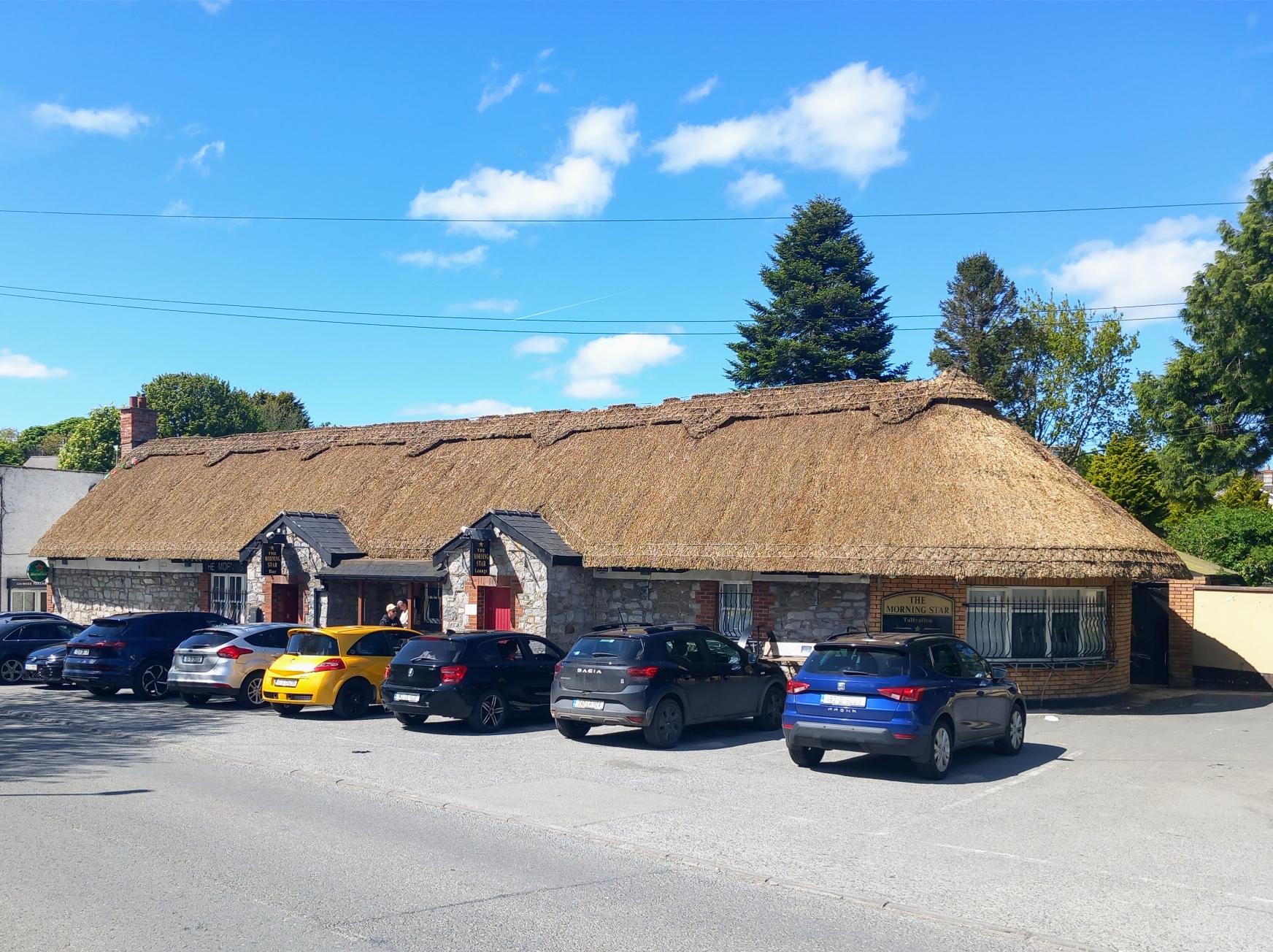
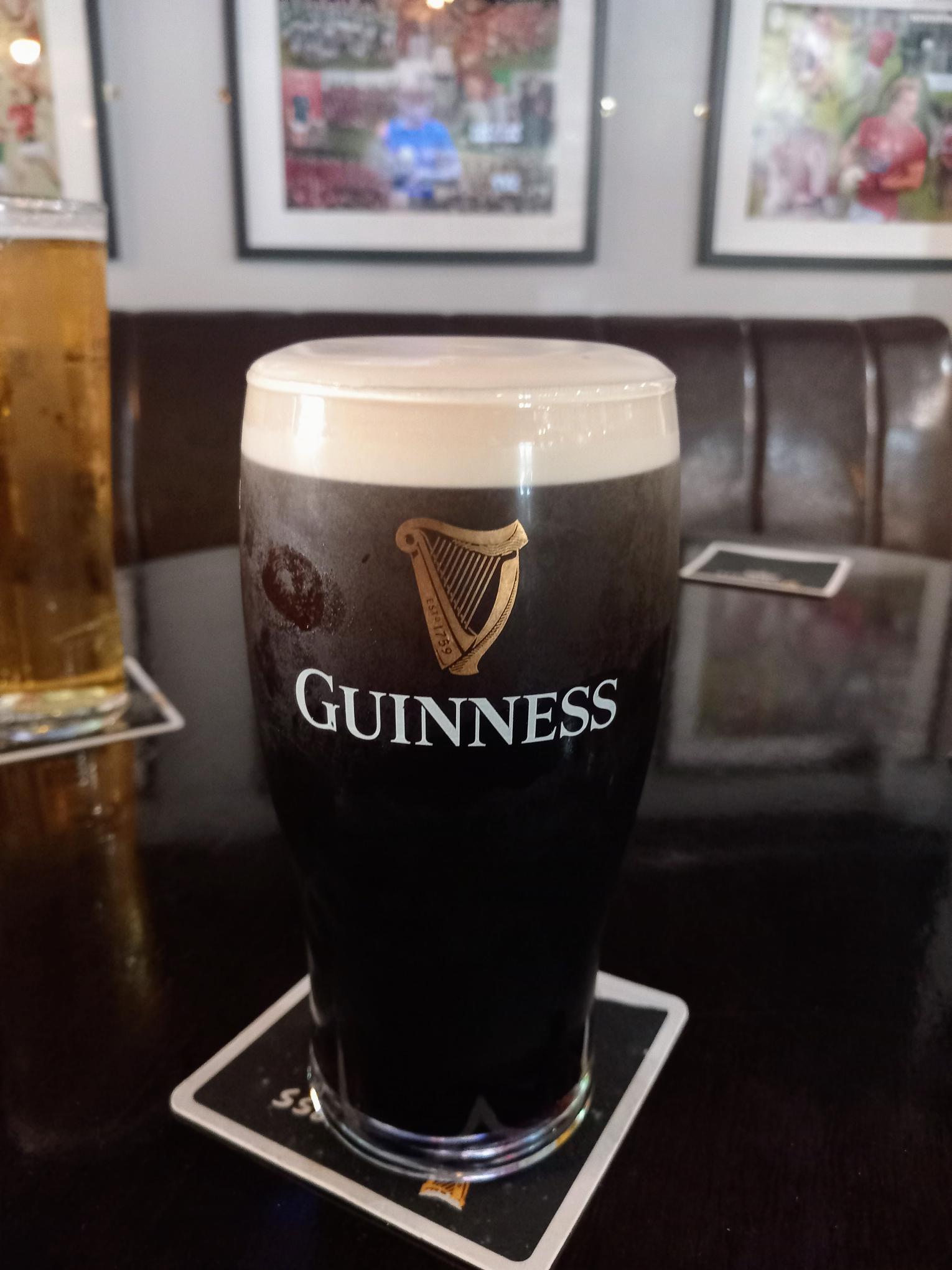
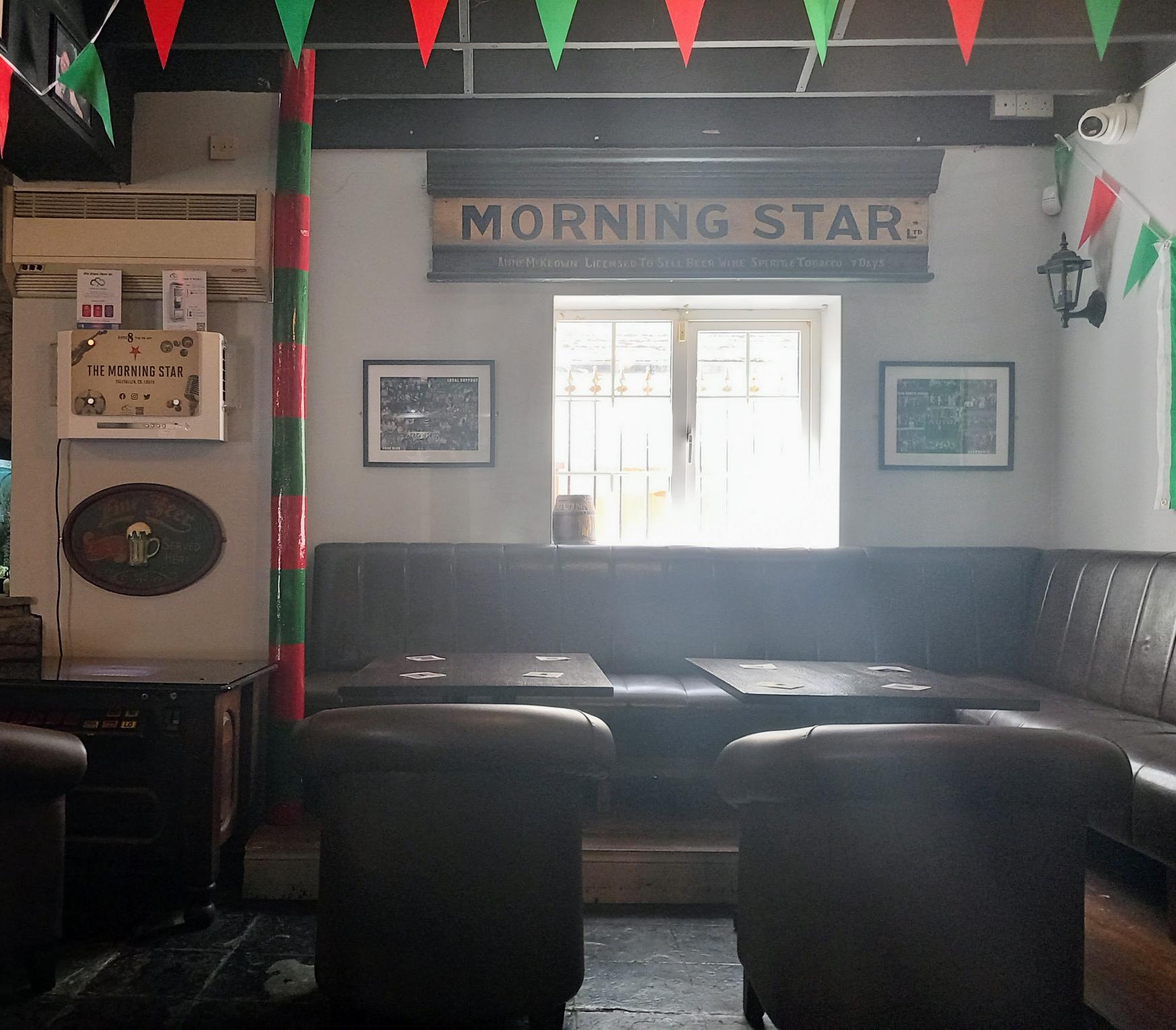
In Tullyallen, we stopped at The Morning Star pub for a pint of Guiness. We got another Camino stamp at the little coffee hut just outside the pub.
After that, we decided to get one more stamp in the supermarket in the village.
Tullyallen is a useful stop on the Boyne Valley Camino because you have a pub, shop and stamp options before continuing on the return section.
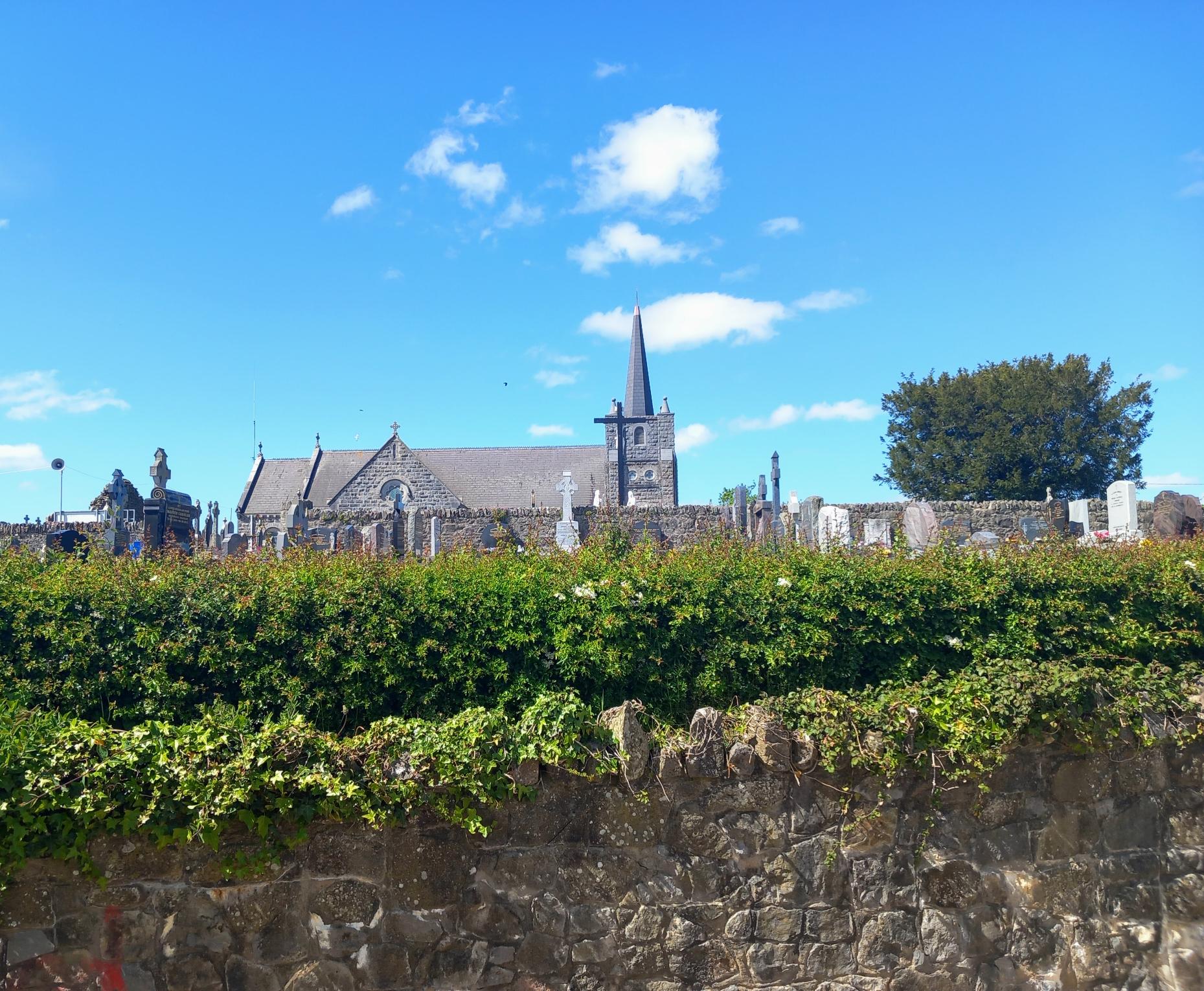
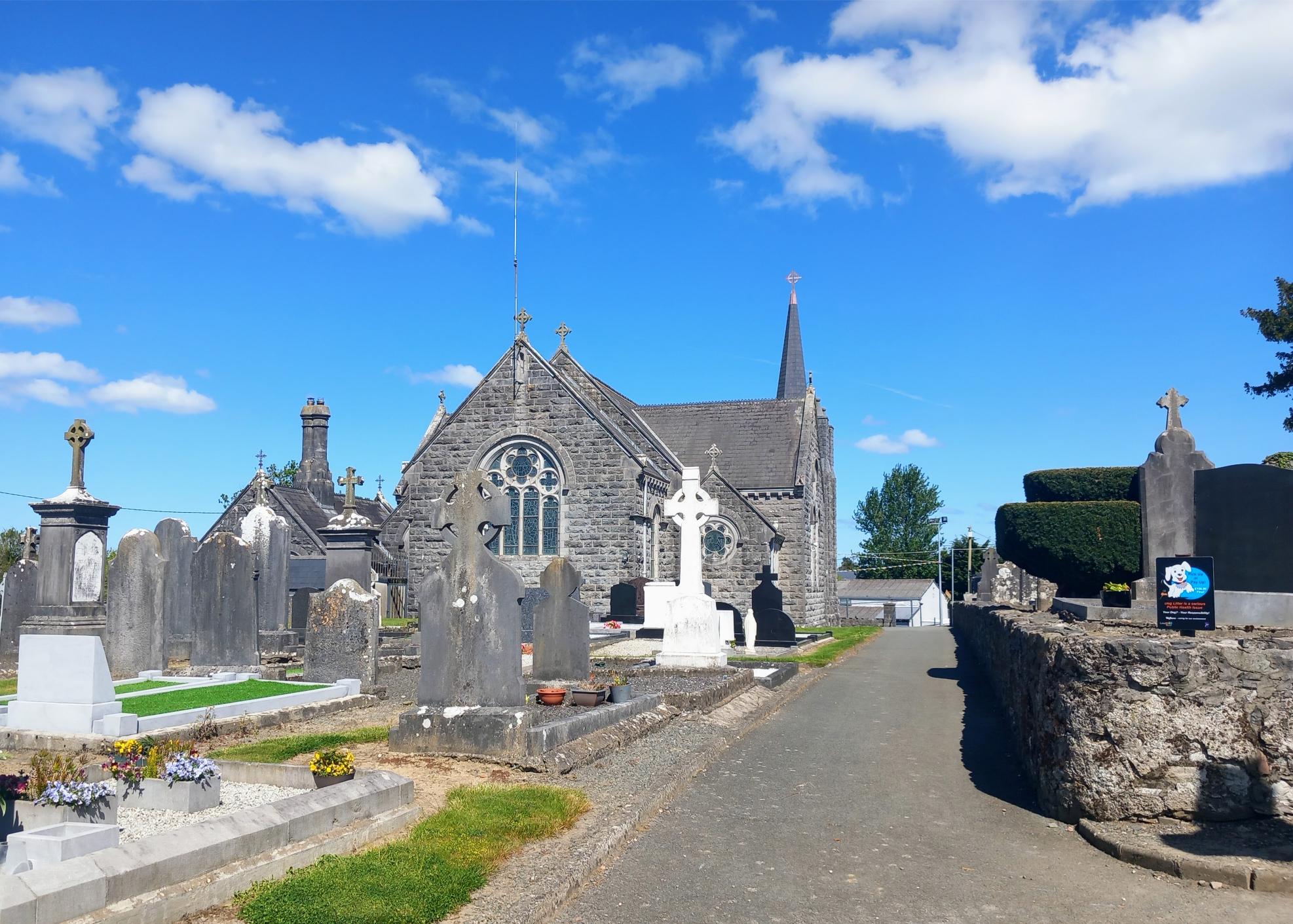
Loop Around Our Lady of the Assumption Church
From the supermarket, we traced our steps back towards The Morning Star pub.
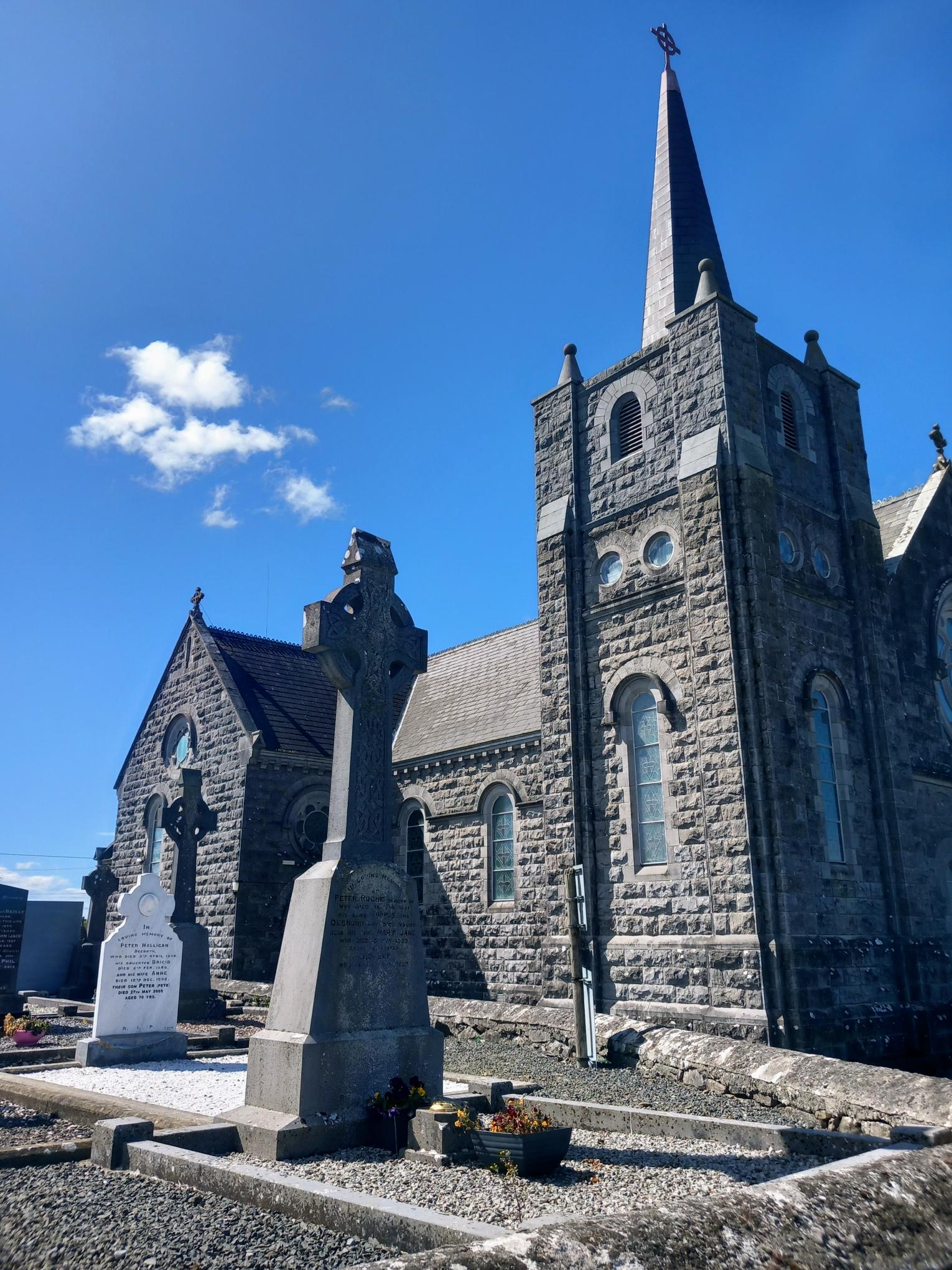
Just opposite the pub, we took the left turn onto the loop that goes around Our Lady of the Assumption Church.
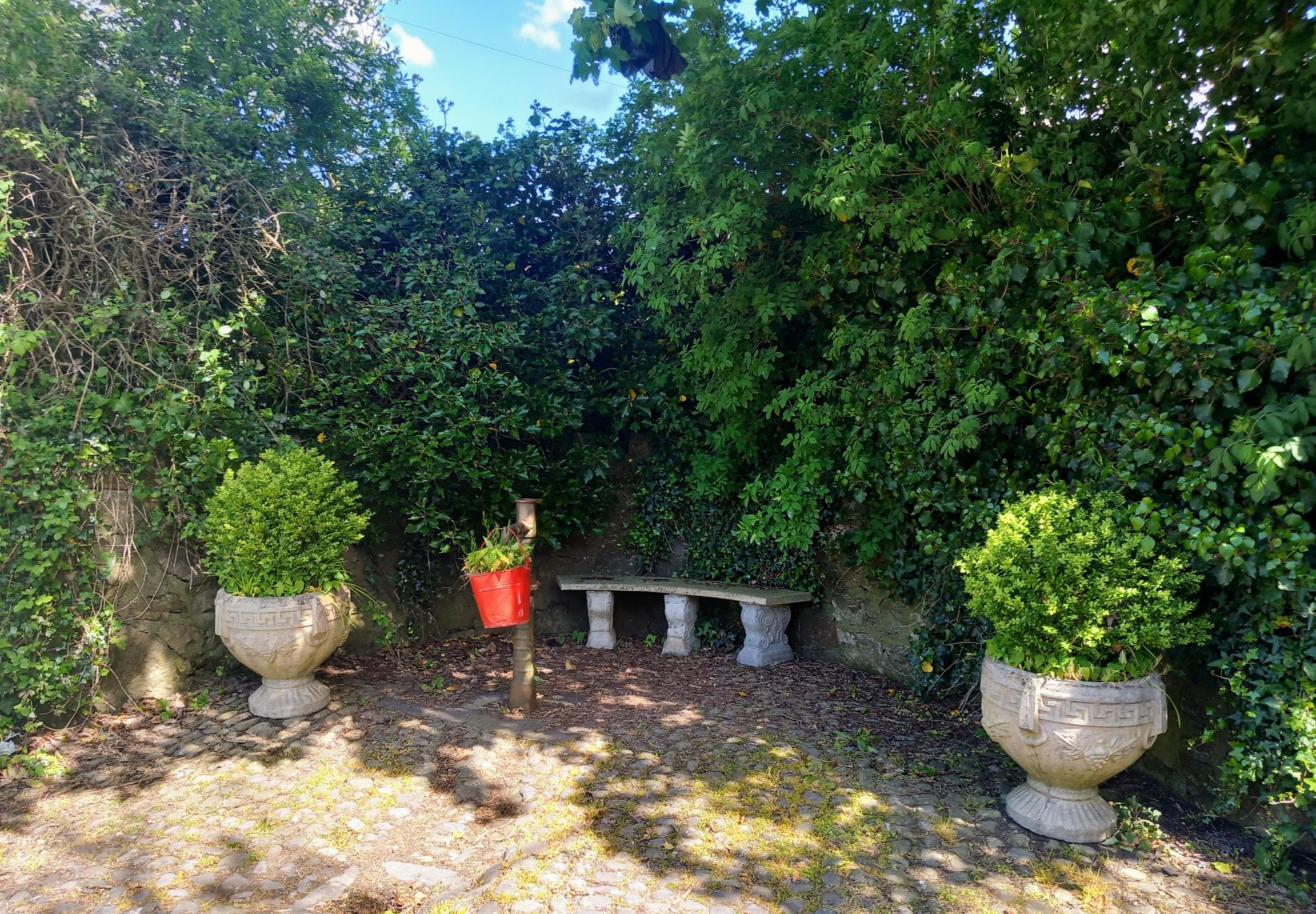
This is a short village section, but it adds another local landmark to the walk before the route heads back into more wooded scenery.
King William’s Glen and Belnumber Wood
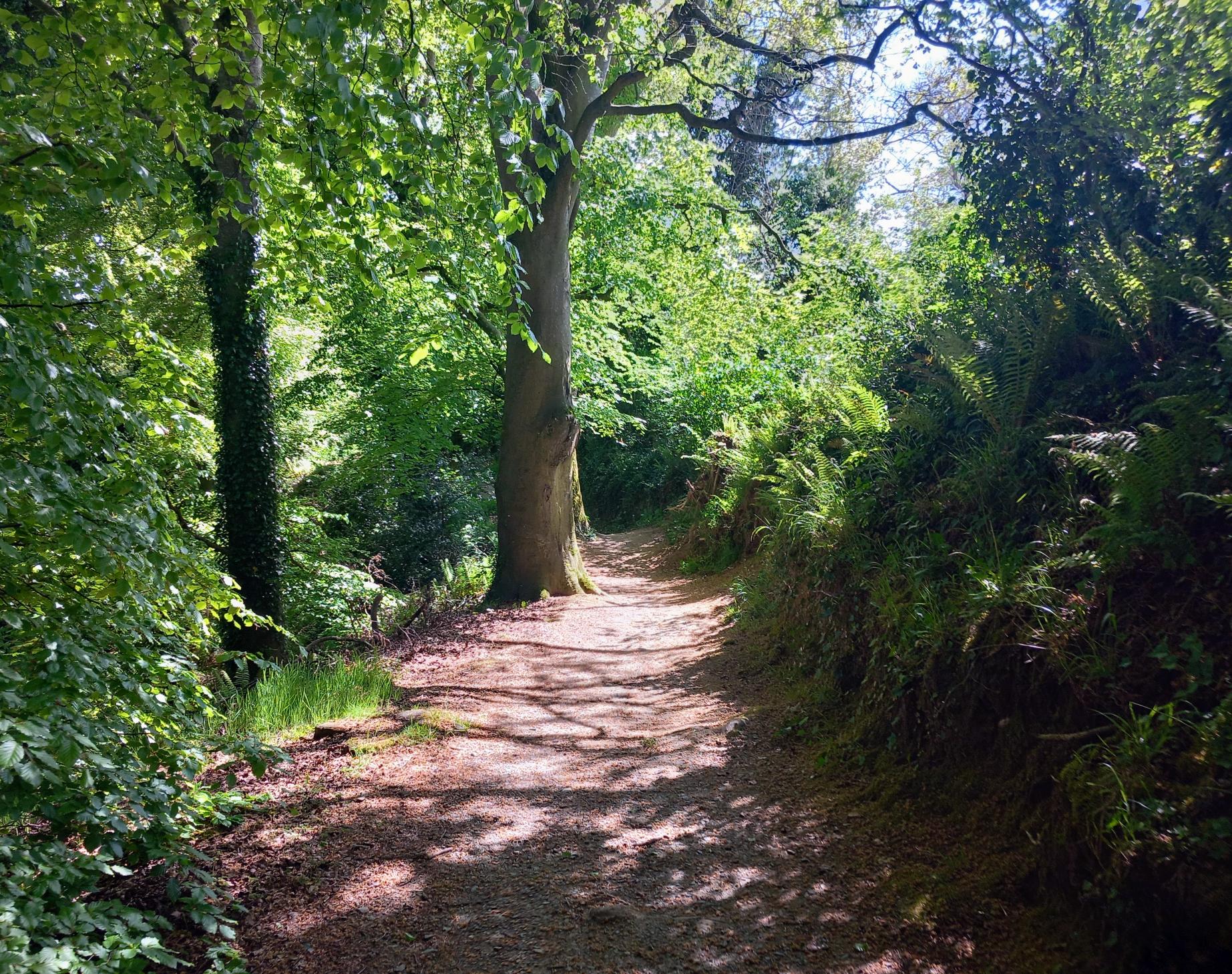
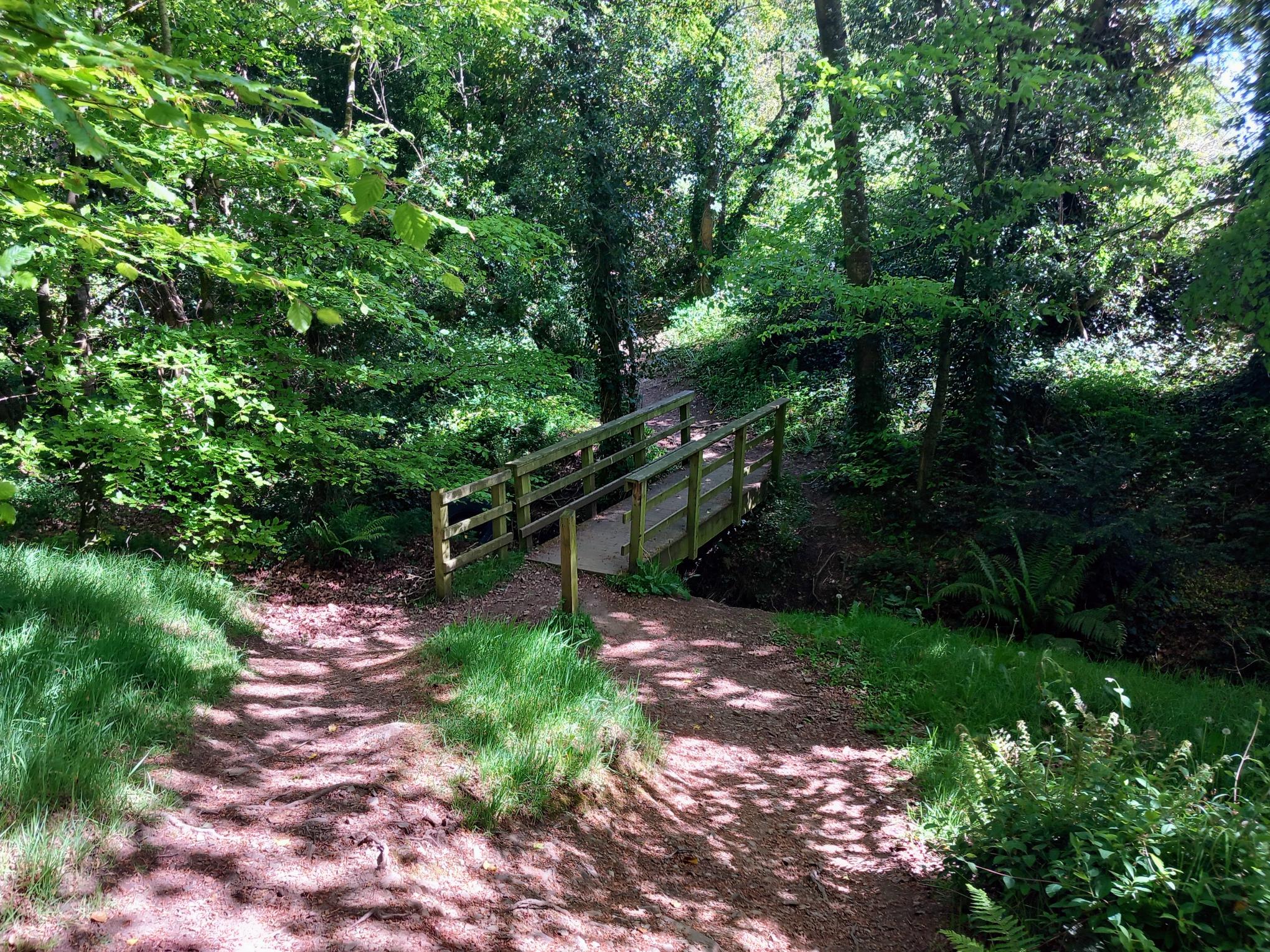
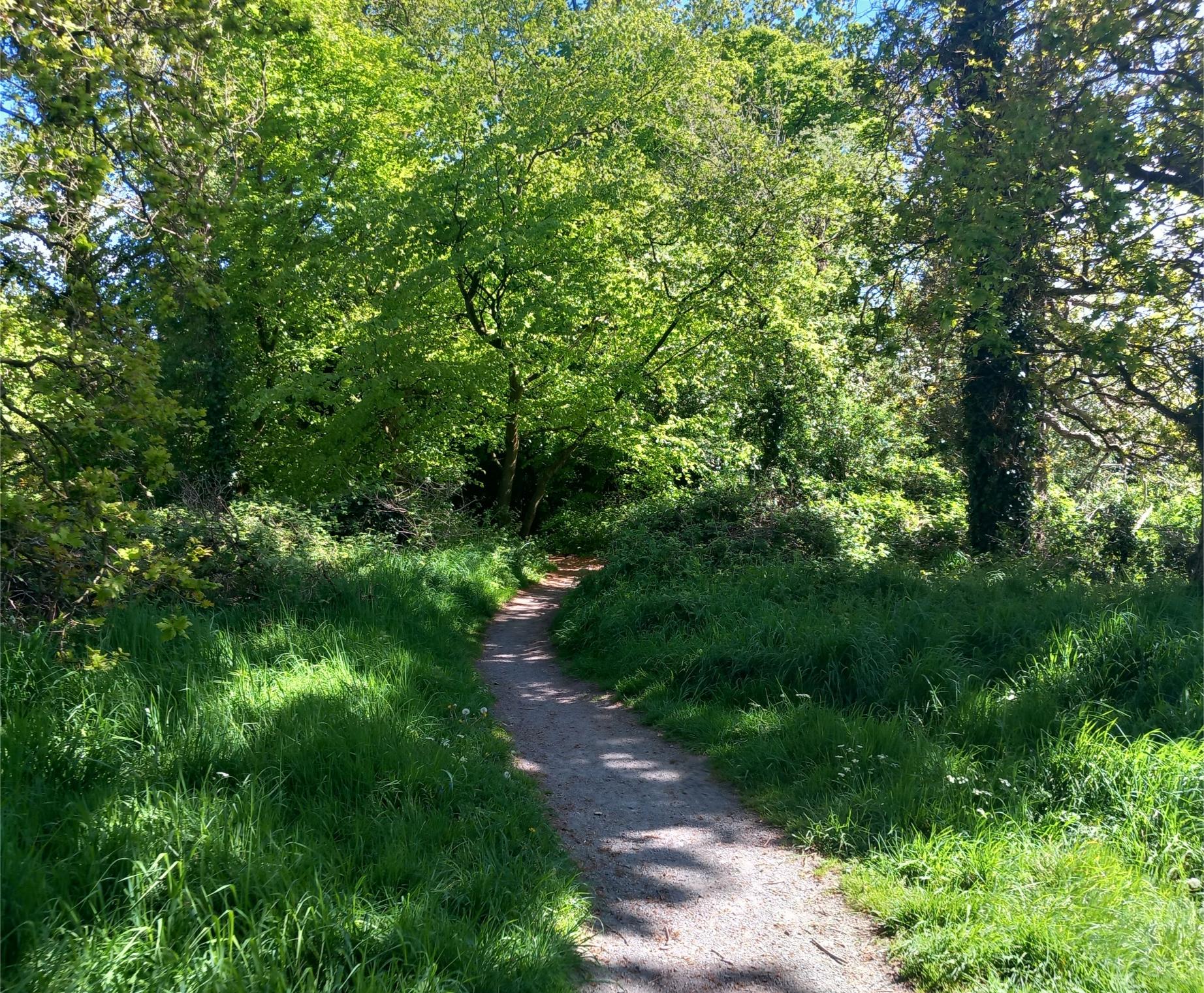
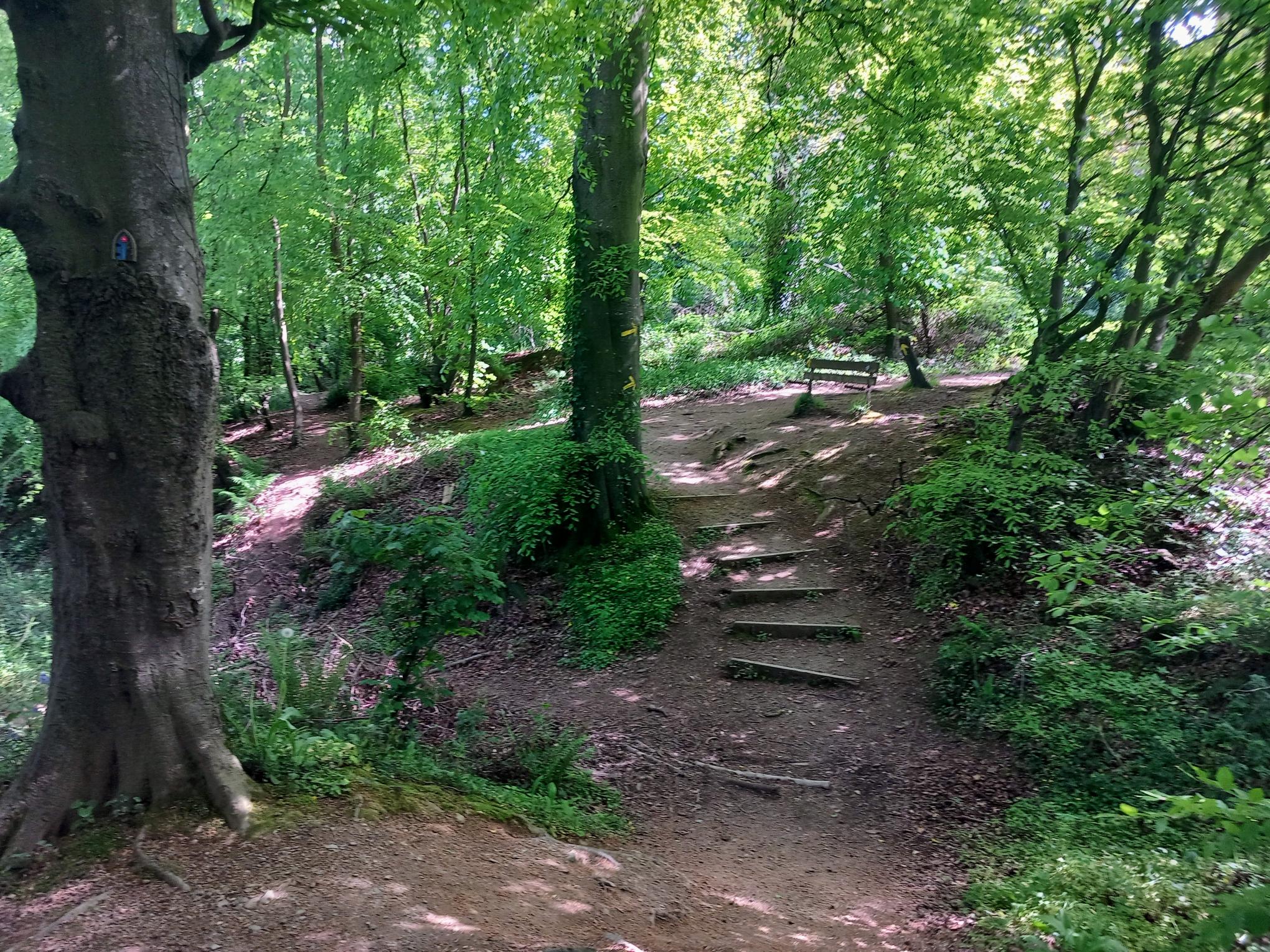
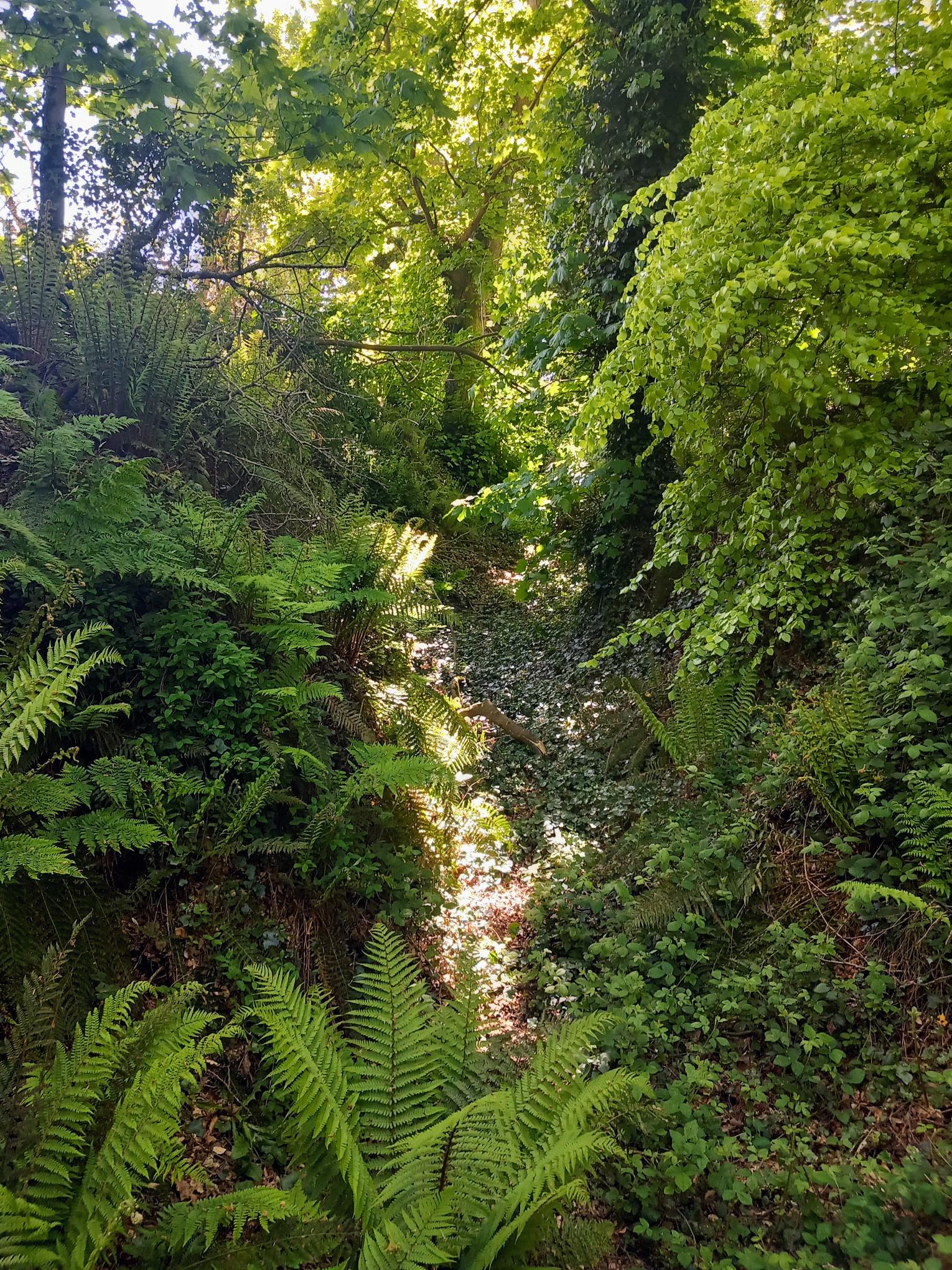
After Tullyallen, the route enters one of the most enjoyable sections of the walk: King William’s Glen and Belnumber Wood.
This was a really nice part of the Camino. The trail becomes quieter and more wooded again, with a peaceful feel after the village and road sections.
The official Boyne Valley Camino route passes through King William’s Glen via Belnumber Wood before continuing towards the River Boyne and Oldbridge.
Eventually, the route brings you back towards the Townley Hall Woods area, completing the figure-of-eight shape of the Camino.
Crossing the N51 and Obelisk Bridge
After the woodland section, the route reaches the N51.
Take care here, as this is one of the points where you need to cross a busier road.
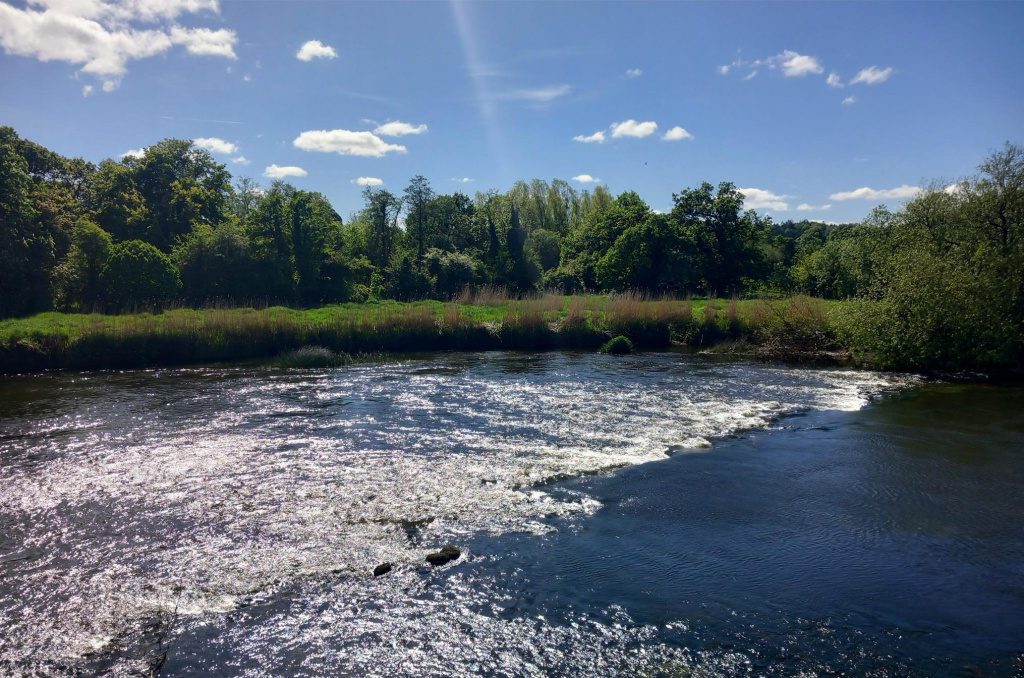
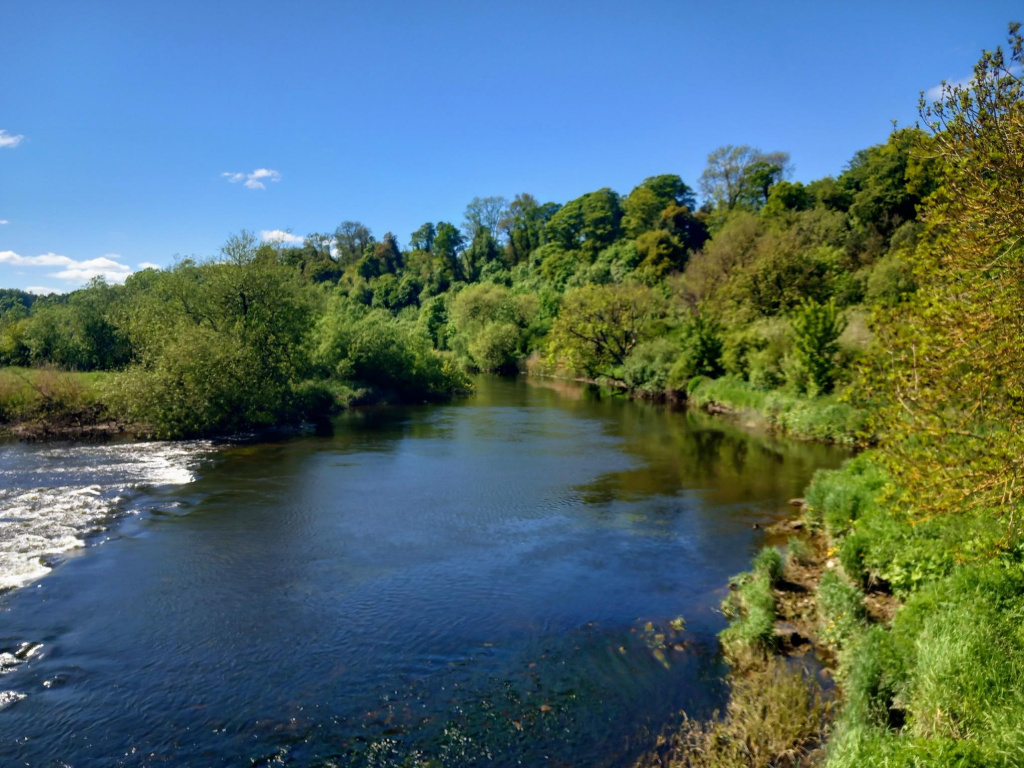
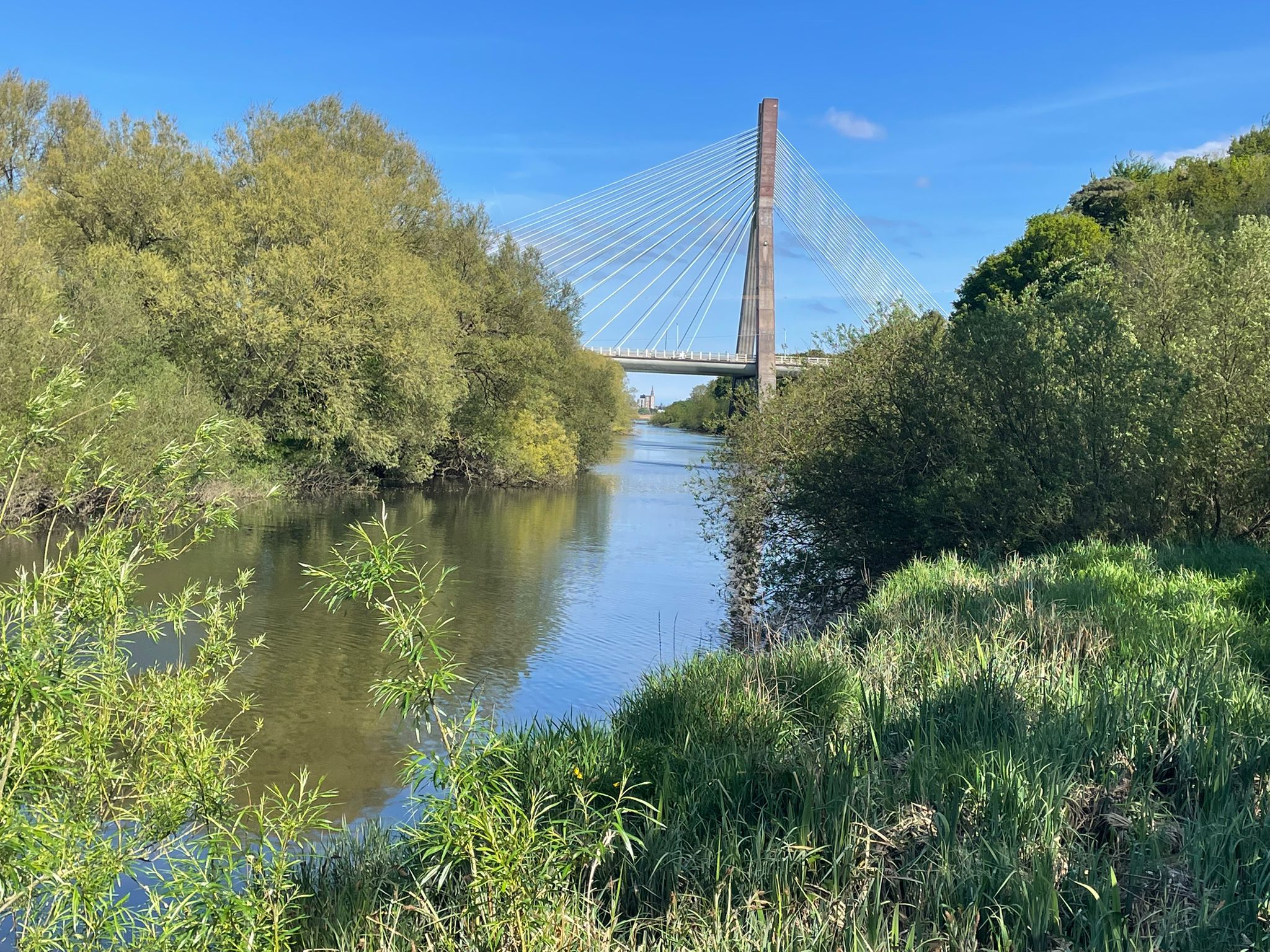
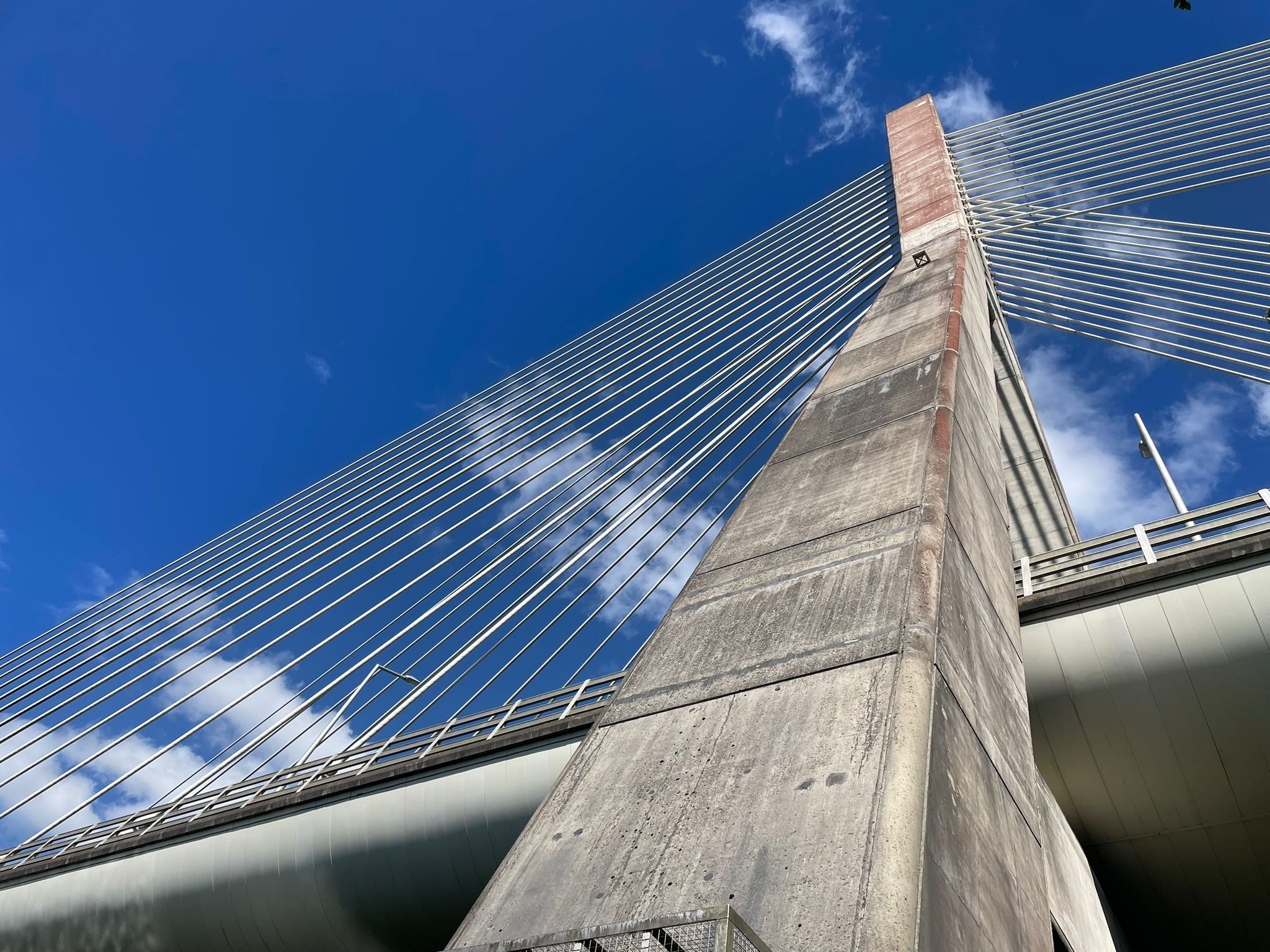
After crossing the road, the route continues towards the River Boyne and crosses at Obelisk Bridge. This is a lovely part of the walk, with beautiful views and a real sense that you are now heading into the final section back towards Drogheda.
Boyne Canal, Oldbridge and the Final Stretch
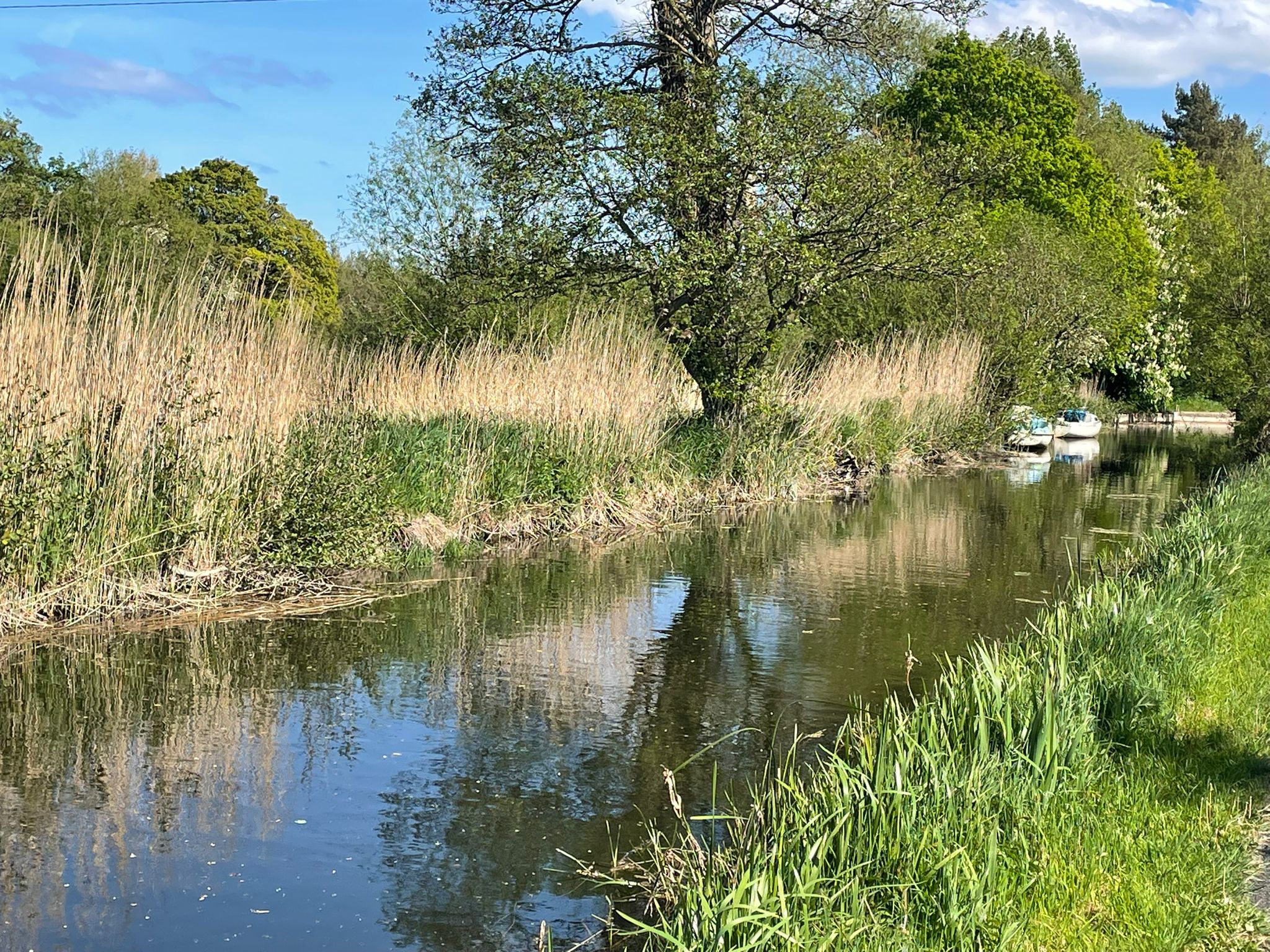
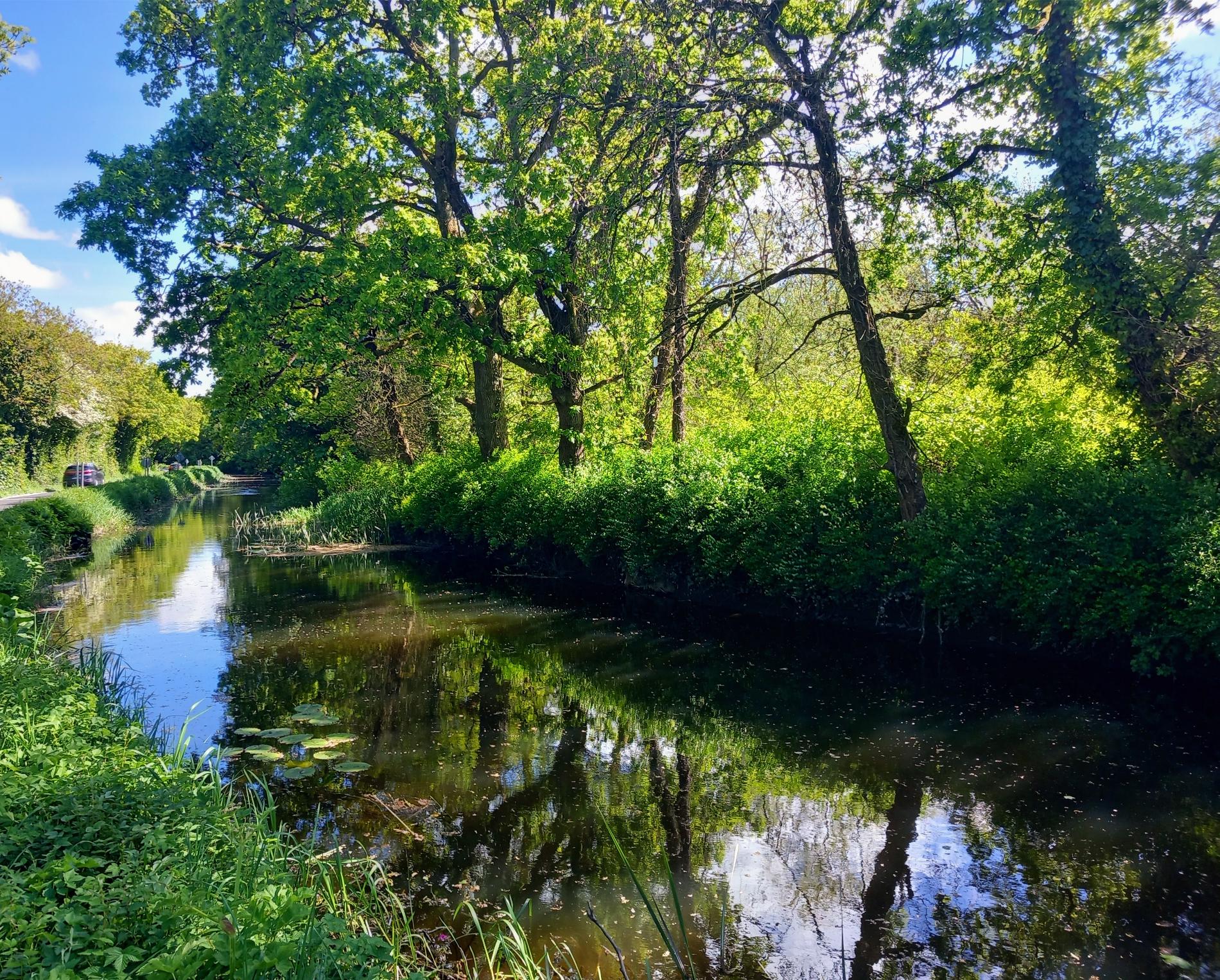
Just after Obelisk Bridge, the route follows a lovely section beside the Boyne Canal. After about 200 metres, you cross a humpback bridge. Around this area, you can get another Camino stamp at Oldbridge Estate.
We actually missed this stamp because we were busy talking and admiring the landscape, so keep an eye out for it if you are collecting stamps along the way.
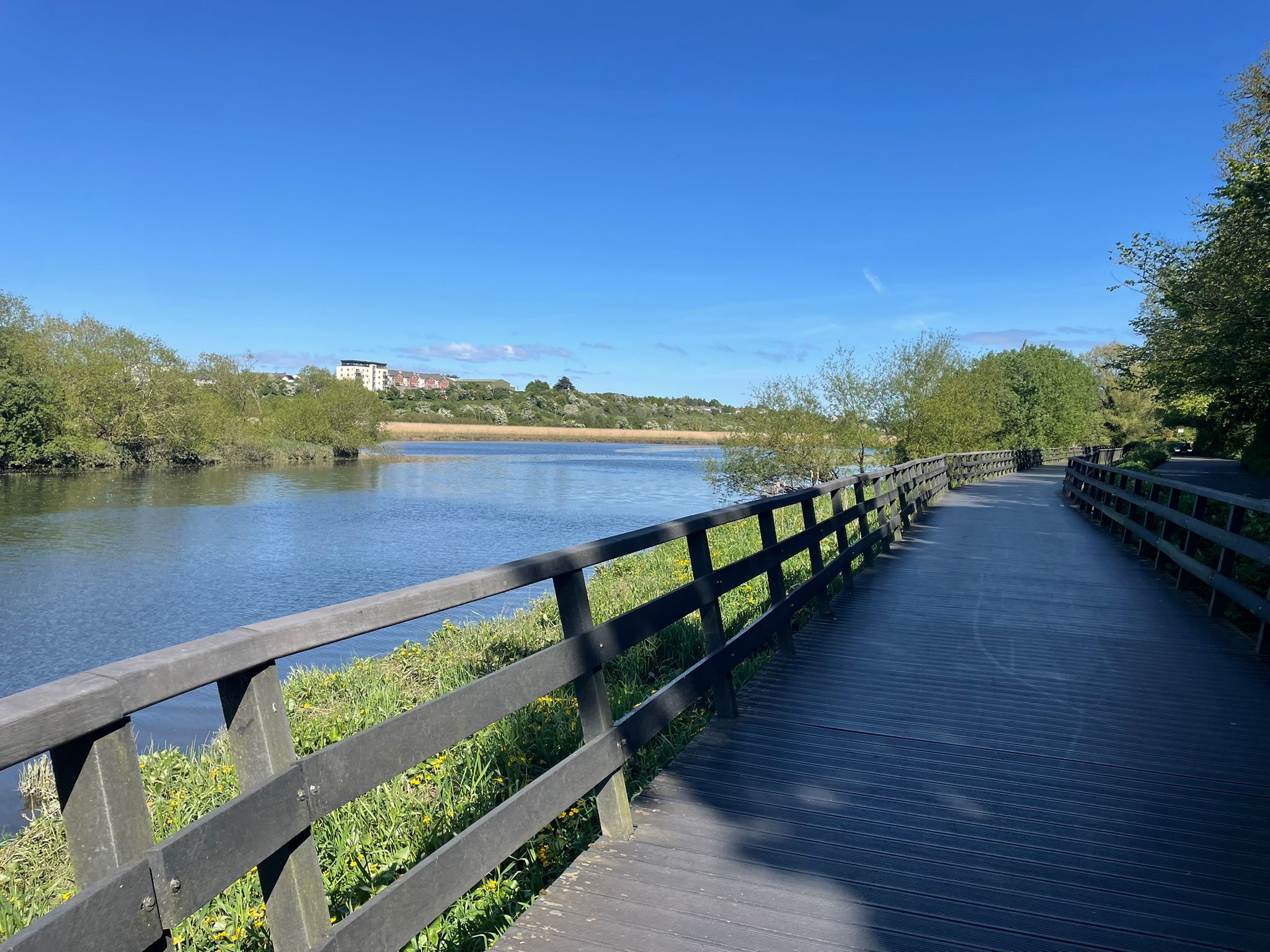
From Oldbridge, the route continues back towards Drogheda along the Boyneside Trail. This is a very pleasant riverside section, with a boardwalk and path following the River Boyne as you make your way back into town.
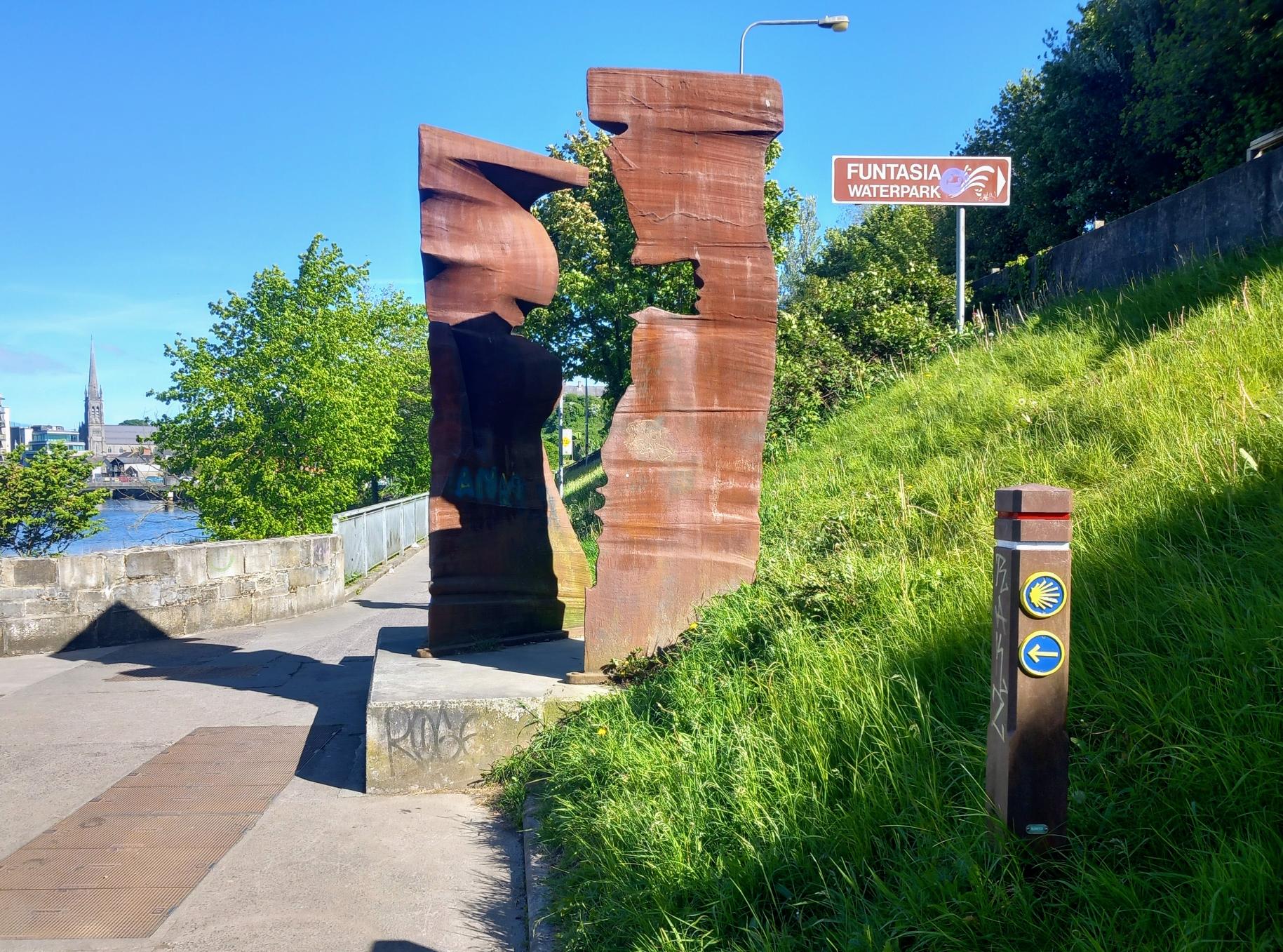
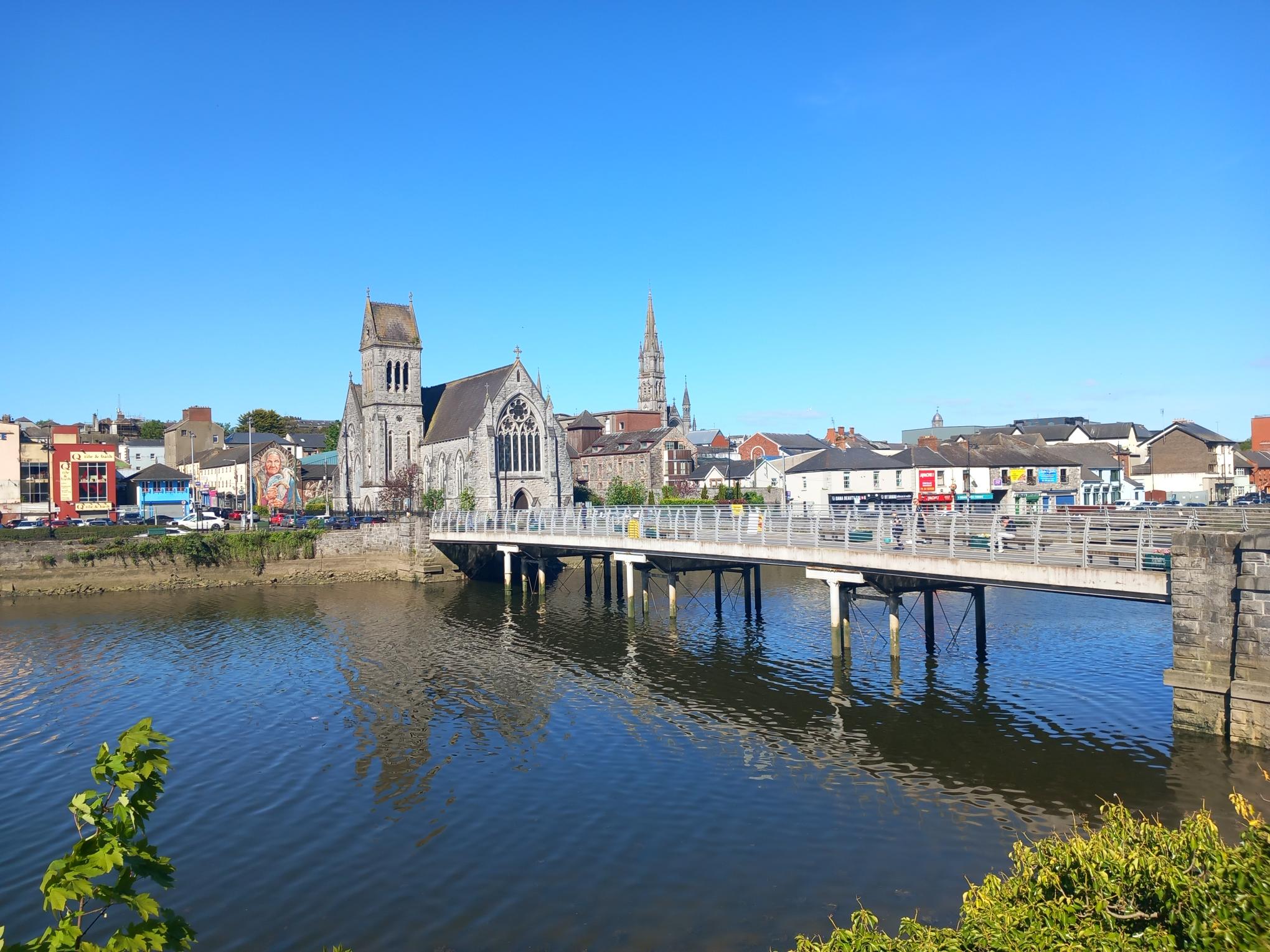
As you get closer to Drogheda, the route passes the pedestrian bridge near the sculpture “The Wanderer”. This is a nice landmark on the final stretch and a good photo stop before continuing towards St Dominic’s Bridge and back through Drogheda to St Peter’s Church, where the walk finishes.
Our final stamp of the day was at Clarke’s Bar in Drogheda.
Where to Stamp Your Camino Passport on the Boyne Valley Camino
If you are walking the Boyne Valley Camino as part of the Celtic Camino, make sure to bring your Camino passport with you and collect stamps along the route.
The Boyne Valley Camino counts as the 25km Irish section, which can then be combined with the walk from A Coruña to Santiago de Compostela to reach the required 100km distance for the Compostela.
On our walk, we found several places where stamps were available, although opening hours can vary. These are the stamp locations we used or passed on the day:
| Location | Our experience |
|---|---|
| St Peter’s Church, Drogheda | We tried here first, but could not find anyone available to stamp the passport |
| Drogheda Tourist Office | We tried here too, but it was closed when we passed |
| The Marcy Hotel, Drogheda | We got our first stamp here |
| Mellifont Abbey Visitor Centre | We got our next stamp here |
| Coffee hut outside The Morning Star, Tullyallen | We got a stamp here |
| Supermarket in Tullyallen | We got another stamp here |
| Oldbridge Estate | Stamp available, but we missed this one |
| Clarke’s Bar, Drogheda | We got our final stamp here |
Opening hours can vary, so it is worth checking in advance and collecting stamps whenever you have the chance.
How to Get a Camino Passport in Ireland
I bought my Camino passport online for €10 before doing the walk.
Camino Society Ireland sells pilgrim passports online and in person through its Information Centre. The passport, also called a credencial, is used to collect stamps as proof of your journey.
For the Celtic Camino, you need to collect stamps on your 25km Irish route and then have your Irish stage verified before continuing from A Coruña to Santiago. Camino Society Ireland explains that after completing the Irish section, you can bring your stamped passport to their Information Centre for verification, or contact them by email if you cannot visit in person.
Once you continue from A Coruña, remember that the normal Camino rules apply in Spain, including collecting two stamps per day if you want to receive the Compostela in Santiago.
Is the Boyne Valley Camino Well Waymarked?
Yes, I found the Boyne Valley Camino very well waymarked.
There are Camino shells, yellow arrows and signs throughout the route. We followed the official map and had no major issues with navigation.
That said, I would still recommend downloading the official route map or saving it on your phone before you go. Because the route is shaped like a figure of eight, it is useful to understand the general layout before starting.
What to Bring on the Boyne Valley Camino
For a 25km walk, I would recommend bringing:
- Camino passport
- Comfortable walking shoes or trail runners
- Water
- Packed lunch or snacks
- Coffee or tea in a flask
- Rain jacket
- Sun cream on a sunny day
- Downloaded map or check the recording made using Hiiker App.
- Power bank if using your phone for navigation and photos
We were glad we brought our own coffee and sandwiches, especially as there was no coffee available at Mellifont Abbey when we visited.
Final Thoughts on the Boyne Valley Camino
I really enjoyed the Boyne Valley Camino.
At 25km, it is a long walk, but the route has enough variety to keep it interesting from start to finish. You pass through Drogheda, follow the River Boyne, walk through woodland, visit Mellifont Abbey, stop in Tullyallen, return through King William’s Glen and Belnumber Wood, cross Obelisk Bridge, and finish along the canal and riverside paths back into Drogheda.
There are also plenty of historic buildings and landmarks along the way, which makes the walk feel like more than just a long-distance trail.
I would definitely recommend the Boyne Valley Camino to anyone preparing for the Camino de Santiago, especially the Celtic Camino from A Coruña. It is also a great standalone walk if you want a long, varied and historic route in Ireland.
FAQ: Boyne Valley Camino
Where does the Boyne Valley Camino start?
The Boyne Valley Camino starts at St Peter’s Church on West Street in Drogheda.
How long is the Boyne Valley Camino?
The Boyne Valley Camino is 25km.
Is the Boyne Valley Camino a loop?
Yes. It is a figure-of-eight loop starting and finishing in Drogheda.
How long does it take to walk the Boyne Valley Camino?
We completed the walk in around 4 hours 55 minutes of walking time, not including longer breaks.
How difficult is the Boyne Valley Camino?
I would describe it as moderate. The route is not technically difficult, but 25km is a long distance, so a reasonable level of fitness is needed.
Is the Boyne Valley Camino well marked?
Yes. The route is very well waymarked with Camino shells, yellow arrows and direction signs.
Can the Boyne Valley Camino count towards the Celtic Camino?
Yes. The Boyne Valley Camino is a 25km Irish Camino route that can be combined with the 75km route from A Coruña to Santiago to complete the 100km required for the Compostela.
Where can I get my Camino passport stamped?
We got stamps at The Marcy Hotel in Drogheda, Mellifont Abbey Visitor Centre, the coffee hut outside The Morning Star in Tullyallen, the supermarket in Tullyallen, and Clarke’s Bar in Drogheda. There is also a stamp available at Oldbridge Estate, but we missed that one.
Where can I buy a Camino passport in Ireland?
I bought mine online for €10. Camino Society Ireland sells official pilgrim passports online and through its Information Centre.
Are there toilets on the Boyne Valley Camino?
There are toilets at Mellifont Abbey Visitor Centre when it is open. You will also find facilities in Drogheda and Tullyallen, depending on where you stop.
Can you get food or coffee along the route?
There are options in Drogheda and Tullyallen. We hoped to get coffee at Mellifont Abbey, but there was none available when we visited, so I recommend bringing your own food and drink.
Is Mellifont Abbey worth visiting?
Yes. Mellifont Abbey is one of the highlights of the route. It is a great place to stop, get your passport stamped, use the toilets, have lunch and visit the historic monastic site.
Where did you park for the Boyne Valley Camino?
I parked at Haymarket Car Park in Drogheda, close to the start of the walk. It cost €1.50 per hour when I visited.
Would I recommend the Boyne Valley Camino?
Yes. I would really recommend it. It is a varied, historic and enjoyable 25km walk, especially if you are preparing for the Camino de Santiago or the Celtic Camino.